Mouthing Along to the Words

…He turns the pages like this on purpose and it sounds like the loud screech of a crow’s claws sliding down a wall of freshly rained-on metal—that kind of sound that makes you want to cover your ears and slap someone all at the same time. He sits there reading “All the Light We Cannot See” while mouthing along to the words. His upper lip moving much slower than the bottom, he smiles at certain parts, clears his throat at others. Occasionally, he will stop to bite a piece of hanging skin by his nail, say “hmmm” then glance out the window and take a monstrous sip out of his giant mug of over-creamed coffee. He returns to his book, furrows his brows as if he doesn’t know what the words on the page are trying to tell him, but really, he’s probably just trying to look intense. Or maybe, it’s just a really good book. But what can be said about reading a book? There’s so much more to be seen that no one notices, but I notice. I notice the steady but slow rocking back and forth and the way he holds the spine of the book in his hands like one would cradle the neck of a new born baby and I wonder just then, what he’s thinking. I realize how beautiful he is and how the whiteness of his skin looks so soft from here and how I wish I was the spine of that book, that holds together all the pages that make him mouth along to the words.

The above is something I wrote while staring at my boyfriend while he read his book in bed with a morning coffee. I sat across this room from him, on the floor on a Saturday morning and simply watched him turn the pages. A simple act. A blink of the eye type moment. Something that would normally go unnoticed to most.

I have always struggled in relationships. There was always a fear planted, watered, and wedged deep in the back of my mind. This fear was like a hand-written sign, painted in blood-red ink that said: You’ll never be good enough, you’ll never fit the mold, you’ll never be what they’re looking for. Now whether or not race places a role here, I do not know for sure. What caused me to label myself as “not good enough”? Did this have anything to do with the confusion I felt growing up mixed-race? Again, I do not know for sure, but I did this in every relationship I have been in because I was never allowed to be myself… until now.

Something is different this time around. The things that I cannot answer, are wrapped in the comfort of my own understanding that for the very first time I am not worried about mixed-race relationships, or being in one because no matter who I decide to be with, it will always be a mixed-race relationship. I am not worried about how people see me, or what they may say about me, or us because something feels like it goes a bit deeper. For me to sit and write a description like the one above, to free myself from the clutter and blur, and see the details, from just glancing across the room, must mean something has changed in my life. Something must have clicked, or fell quietly in to place like a lost puzzle piece that was hidden under the bed for the longest time leaving that 10,000-piece puzzle incomplete for years. I feel like I found that piece, without ever realizing it was missing, or that I was looking for it.

Even though that description was written about him, I was only able to write it because I am seeing myself for the very first time, in all my entirety. I have all the pieces and I know exactly where they go.

I’ve judged myself and allowed others to judge me based purely on my exterior appearance for so long, that I began to paint—and even write—a distorted image of what I see every time I look in the mirror. I realize that what I see will always be different from what he sees, and different from what everyone sees, but he has helped me to de-blur and to look deeper. He has helped me to hug the details, cradle the spine, and shown me that I can turn the pages as loudly as I want and mouth along to the words—just as long as they are my words.

______________________________________________________________________________________________________

continuing studies shots of chelylene for brochure

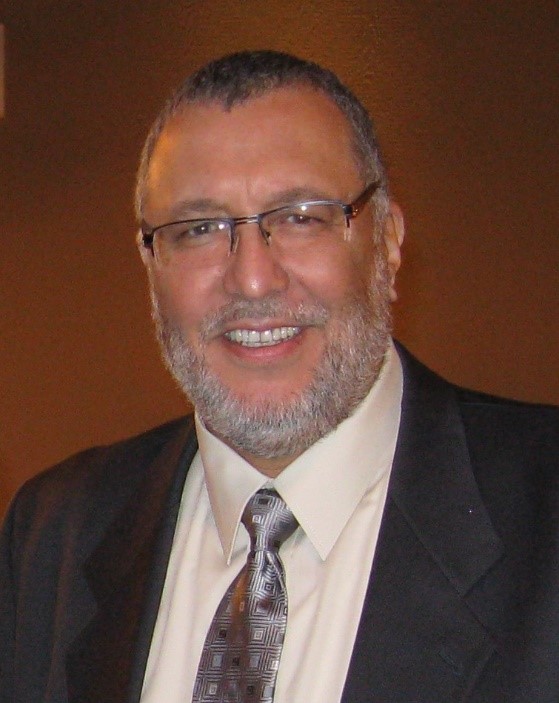
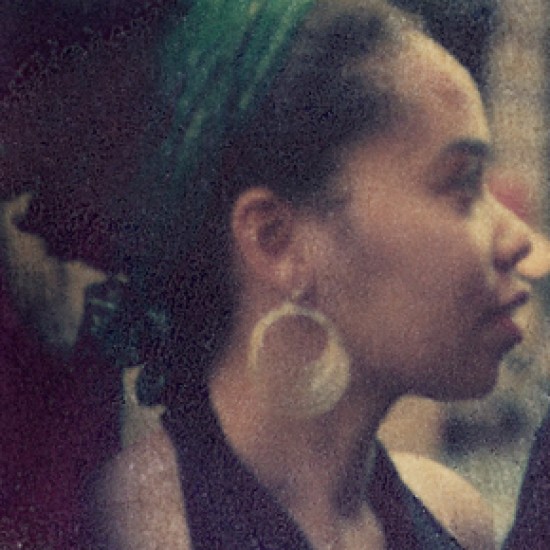
Chelene Knight lives in Vancouver, BC and is a graduate of The Writer’s Studio 2013 in the poetry cohort. Chelene is a Library Assistant at the Vancouver Public Library, and Managing Editor at Room. Previously, she worked as a Manuscript Consultant through SFU, and as a proofreader at Montecristo magazine along with other editor gigs with a poetry focus. She has been published in Amazing Canadian Fashion Magazine, Sassafras Literary Magazine, emerge, The Raven Chronicles Literary Magazine, and in Room 37.4. She just finished her second manuscript, Dear Current Occupant, a collection of sonnets, prose poems, and letters which is forthcoming with BookThug in 2018. Chelene is now dabbling in short short SHORT fiction. Her first book, Braided Skin, was published by Mother Tongue Publishing in Spring 2015. Find out more about Chelene at cheleneknight.com and @poetchelene.


I Wanted to Tell Him

Never sure how the word “dad” would sound coming out of my mouth or even the way it might feel as it slides off my tongue. What would it feel like for him to place a triple-scoop vanilla ice cream cone in my tiny five-year-old hand, and wipe the drips off my chin with a crumpled up napkin from his pocket, while we hear the people passing by whisper,

she looks just like him.


I wanted to tell him that when I think about how I grew up “mixed” the only word I taste is confusion and how it seemed to tower over my teenage mind like a translucent fog full of “what ifs” “how-comes” and “are you sure’s”. My Black mother raised me the best she could by herself, but I was angry, I’m still angry. My East Indian-Ugandan father, not visible, never visible, I can’t hug him like I want to. I can’t hear his voice like I want to … even when nothing else is audible.


I wanted to tell him that whatever memories I have of him always show up blurry and unrecognizable, fragmented and sparse except for the fact that we both like massive amounts of black pepper on our over-easy eggs (I learned this when I visited him at eleven years old and we both covered our eggs in the black sprinklings)—the very first similarity.


I wanted to tell him that it’s ok to call me his daughter, but whether or not he sees me as such I do not know.


I don’t want to know.


I wanted to tell him that I do not look like anyone else in my family. Some of the younger cousins are mixed in some way—but not my way. I don’t possess the soft beauty of my half Black, half White cousins. I do not possess the deep dark beauty of my mother and aunts because they hold the very things I always wished I had—there’s a beauty in knowing who you are.


I wanted to hide so that I wouldn’t have to answer questions about my father:


Is she Black? What is she? I think she’s East Indian. No, look at her hair, she’s definitely not Black. Where’s she from?

I wanted to tell him that when people ask who my father is I tell them about the eggs.


I wanted to tell him that I live in a city where everywhere you go, there’s mixed people. People dipped in all 364 shades of brown. People in coffee shops, bank lines, grocery stores, hair salons, libraries, crowded buses and over-booked restaurants. And when I walk down the street with my mother, my daughter, or my cousin, I don’t want to have to prove we are related by answering a series of questions, followed by a series of follow up questions, and then long stares, and “are you sure’s?” ending with my own deep sighs.


I wanted to tell him—to confess—that I wasn’t sure who I was back then or now, and that I told terrible lies to avoid the questions that always came:


You’ve got good hair. Why do your hair up. Let your hair down. Look how long your hair is when you straighten it. Smile, your hair is beautiful. Your hair looks good against your light skin, don’t you think?

I tell terrible lies.

I wanted to tell him that my then eight-year-old tri-racial daughter who’s now fourteen, used to ask me why she doesn’t have a grandpa, and that I had no answer for her because no one had an answer for me.


I wanted to tell him that when I look into the mirror now as a thirty-five-year-old mixed-race woman I still have no idea what I am supposed to see, and that I still wonder if living in between is ever a safe place to reside.


I wanted to tell him that when people tell me I’m beautiful it hurts for days and days.


When my daughter says she does not want to go to her dad’s for the weekend I tell her to hug her dad while she can. When she says her dad doesn’t understand, I tell her to explain things to her dad while she can. When I sort through old photos of my baby daughter smiling and posing with her dad, I say to myself, she will need these someday.


I tell her to write down all the things she wanted to tell him.


Then tell him.

______________________________________________________________________________________________________

continuing studies shots of chelylene for brochureChelene Knight lives in Vancouver, BC and is a graduate of The Writer’s Studio 2013 in the poetry cohort. Chelene is a Library Assistant at the Vancouver Public Library, and Managing Editor at Room. Previously, she worked as a Manuscript Consultant through SFU, and as a proofreader at Montecristo magazine along with other editor gigs with a poetry focus. She has been published in Amazing Canadian Fashion Magazine, Sassafras Literary Magazine, emerge, The Raven Chronicles Literary Magazine, and in Room 37.4. She just finished her second manuscript, Dear Current Occupant, a collection of sonnets, prose poems, and letters which is forthcoming with BookThug in 2018. Chelene is now dabbling in short short SHORT fiction. Her first book, Braided Skin, was published by Mother Tongue Publishing in Spring 2015. Find out more about Chelene at cheleneknight.com and @poetchelene.


Are We Black Enough Yet?: A Look at the Mixed Person’s Role in the Black Lives Matter Movement

I’m mixed – African American and Irish. My mother is Black – I was raised solidly within the African American culture alongside a firm understanding and embracement of my Irish roots. Both sides of my heritage are steeped in oppression and slavery – histories that people want to forget and ignore. I have been told by my Black friends I have “that good mixed hair,” “that good light skin,” and “dem good pretty eyes.” I know I’m different – I’ve been told that my entire life from family, friends, and teachers – sometimes even strangers when they do the inevitable “guess Deanna’s race game” without my permission. People pass by me on the street or in the mall and they see one of two things: I’m Black with something or I’m Dominican with something; it’s never that I’m White and something.

With the entire world knocking at my door with my “otherness,” feeling the necessity to exclaim that I am not White alone, why do I feel unwelcomed in the conversation surrounding #BlackLivesMatter? Why have I gotten into multiple arguments with – mostly – Black women on Facebook telling me I’m not allowed to be a part of the movement because of my light skin and nice hair? Because of an assumed privilege both of those phenotypic qualities, among others, may or may not have given me in life? Because they assume my mother is White and did not raise me within the lens of a Black person in the United States (not that I’m saying whatsoever that mixed race peoples with White mothers deserve less access to this movement – this is just an argument I’ve gotten into with another Black woman)? Why am I devalued in the eyes of African Americans (most of whom, sorry to say, have White in them thanks to the prevalence of rape during slavery) when I have just as much soul, anger, and desire for equality as they do?

An article written by Shannon Luder-Manuel, a mixed race writer in Los Angeles, really hit me hard with her opening line: “When I talk about my family culture, I’m mixed. When I talk about racism, I’m black”.[1] Praise God, Hallelujah, Shannon you just said what we’re all thinking – we as mixed raced individuals live on this tight rope where if we lean to one side we identify ourselves mixed and embrace both sides of our heritage, but on the other side we have the option to choose which portion of our heritage we want to fall upon. When Trayvon Martin was murdered back in 2012, I was in my first year of undergrad. I cried for days. I saw in him my cousins – Black men I had been raised with and loved by and guided by my entire life. I saw in him my future children – kids who, regardless of the race I marry, will be “others” just like me, just like Trayvon. When Sandra Bland was murdered for a failure to signal, I saw myself – a woman of color who forgets to do the boring tasks while driving. I have never been pulled over (knock on wood) but I have never been as terrified or aware as I am today.

I’m not trying to say that my ambiguous looks do not give me some headway in regards to potentially being harmed by police brutality – I know I confuse people and that’s in my best interests. I know that because White people can’t pinpoint my exact ancestral heritage (I’ve gotten as far out as Indian mixed with Dominican), I have a better chance at not being targeted for the historical no-nos for Blacks, such as DWB (Driving While Black). I know my designer clothes (because my mother buys them for me, I’m poor guys) and my fancy car aid in my assimilation into the “White” culture. I know that the preference for my lighter skin and fluffy curls, both within and without the Black community, puts me at the head of most ethnic status quos. However, even with these “privileges” (I don’t necessarily see them as such because the fou
ndation for my body is still “other” and I will never, ever be able to fully be accepted by the White community) I am still at risk, my family is still at risk, my future family will still be at risk – as long as my body and the bodies directly connected to me, now and in the future, are deemed as “not White,” I will forever fight for the Black Lives Matter Movement.

When the whole of the Black community accepts me – and others with the same intentions and racial ambiguity as myself – the Black Lives Matter Movement will only grow stronger – it will prove to White people that nothing, not even the fact that someone has White directly in their ancestry, will break us. We will always stand together and we will fight until our bodies and the bodies of our loved ones are protected against outside harms. Are we Black enough ye

[1] See: Luders-Manuel, Shannon. (2015). “What it Means to be Mixed Race during the Fight for Black Lives.” For Harriet. Accessed August 9, 2016: http://www.forharriet.com/2015/08/what-it-means-to-be-mixed-race-during.html#axzz4Gt2dOOi3.


DeannGraduation1a Keenan lives in Upstate New York and recently graduated from Binghamton University with B.A.s in Psychology and Africana Studies, with honor’s in Africana Studies. She is currently a Copy Editor for Africa Knowledge Project – a publishing house that has a wide range of journals that discuss various aspects of the African Diaspora. She is also currently the Guest Blog Coordinator for Mixed Roots Stories. She also holds a position as an Adjunct Lecturer at Binghamton University for the 2016-2017 school year, teaching Africana Studies 101. She has been published in the journal ProudFlesh twice, with two pieces in production, and has presented at the American Public Health Association (November 2015). She hopes to continue her education in Developmental Psychology, researching Mixed Race identity formation, among other topics regarding the population.


Pocho-Going Rogue

For as long as I can remember, identity by choice or force has wrought conflict and contradictions. Who am I? What am I? Where did I come from? Where am I going?

My surname implies I’m white, but my brown skin begs to differ. Am I Mexican? My Mother’s family tree most certainly is, but my Father’s Celtic, Euro-Iberian branch bears my Anglo surname.

Am I more culturally European than ethnically Latino? Am I a Native American, rooted to my beloved Yaqui Abuela? To which tribe do I belong? The truth of the matter is that I’ve teetered on the edge of dueling race and ethnicities all of my life. My admission accepted or denied for equally irrational cultural and color coded reasons. My detractors accused me of acting too white; being too dark-skinned; not being Yaqui enough. They ridiculed me for, not speaking Spanish fluently; for, not being from the “barrio”; for speaking “fancy” like a gabacho.

By many, I’m considered a “Pocho” – a half-breed; an Americanized Mexican, who has “lost” his culture. I’m an exile in the land of my birth.

So after a period of dealing with these socially engineered absurdities I decided to go rogue. My previous applications for club admission were less about acceptance than it was about attaining membership.

Membership, after all, has its privileges. Just ask any country club crony, politician, and corporate executive – any member of any union or fraternal organization, or a religious shill.

Race, religion, and ethnicity are no different. Why not join the club and reap the rewards? Ironically, rejection by each group did me a huge favor. Being summarily rebuffed inspired me to find out who I was at my core.

Although I primarily identify myself as Latino, I discovered I wasn’t solely Mexican-American, ‘White,’ or Native-American or any other “pure” or artificially coalesced American classification. To support what I “felt” instinctively, I sought “scientific” corroboration through racial and genealogical DNA testing. My DNA results revealed a wealth of ethnic diversity. I am:

41% Native American;

40% White European;

7% Middle Eastern;

4% African;

4% Caucasus &

4% East, Central, South Asian.

I discovered that the whole of me was greater than the sum of my parts.

I’m an everyman. I’m good with that. I like being whole.

I embrace my ethnicities entirely, not as separate distinctions capable of wielding favor or force. Mine is an inclusive, universal existence rooted in the interconnected conservation and fate of mankind and the planet.

An early proponent of this perspective was Alexander von Humboldt, the preeminent 19th-century Prussian naturalist and explorer of Latin and South America. When asked about the connection between places, people, and culture, he opined:

“The only way to understand the world is to look at it as a whole instead of breaking everything down into isolated parts. The most dangerous worldview is the worldview of those who have not viewed the world.”

Amen, brother. Expand your horizon. All human beings, regardless of race, place, and society are interrelated.

Yes, of course, I realize that racial and ethnic lines deeply divide this country. And no, I don’t believe in the cockeyed notion and optimism that we live in a post-racial America and that we’re all simply Americans, kumbaya. Government doctrine clearly lays out what American distinction is: we’re either “white,” Americans by amalgamation or nonsensically, all “others.” All, I am saying, is that I chose not to be racially or ethnically manipulated by anybody or anything.

Identifying me by color or socially engineered dissimilarities is to marginalize my consciousness, humanity, self-worth, and empowerment. Artificial classifications have expiration dates, and I’ve reached mine, thank you very much.

I understand I can’t change how the world defines me, but I can change how I view my world.

To me, self-awareness began with the past. I believe in the adage that, “To know where you’re going, you must first know where you’ve been.” I accept as true that the discovery of our origins and our impetus for ancestral emigration links history with today and today with the future.

It’s the conduit from which independent cultural identity and sensibilities are born, cradled, nurtured and grown.

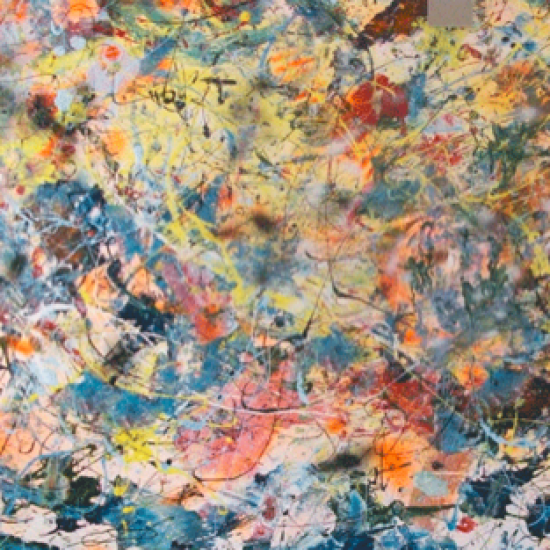
When it’s all said and done, my life is a multicolored collage of imperfection, as it should be. It’s not a work of art; it’s more a work in progress. Even so, it’s mine to paint. To quote Jackson Pollock, the influential American drip painter and a major figure in the abstract expressionist movement:

“My painting does not come from the easel. I prefer to tack the outstretched canvas to the hard wall or the floor. I need the resistance of a hard surface. On the floor, I am more at ease. I feel nearer, more part of the painting, since this way I can walk around it, work from the four sides and literally be in the painting.”

In my “Pocho” eyes, the human race is a kaleidoscope of colors cascading down on the canvas we call a planet. That’s a painting, worldview, identity and life worth exploring, and where it takes me is entirely up to me.


Frederico WilsonFrederico Wilson is currently the owner and President of an International Fluid Power Procurement and Sourcing Company; founder of a non-profit organization (under development); blogger at mestizoblog.com, focusing on multicultural perspectives and issues. He is a USAF veteran (environmental/missile inspection specialist); and former domestic and international professional in the Airline, Telecommunications, Sales, and Financial Securities industries. Originally from Arizona, he is a lifetime student of cultural anthropology and applied behavioral science. He attended Arizona Western and the University of Arizona and holds numerous military technical, and corporate management certifications and licenses.

He is of mixed Mexican, Indian (Yaqui Tribe), Euro-Iberian, and Cornish Celtic ancestry. He lives, works, and writes in metropolitan Seattle, Washington.

He is best described by a quote attributed to Anthony Bourdain when recounting the preparation of a Burgundy wine-base rooster entrée.

“So, they take this big, tough, nasty-ass rooster, too old to grill, too tough to roast. Marinate and simmer the shit out of it, before it’s tasty.”

Frederico is the author of a new book, Escaping Culture: Finding your place in the world. Find out more on his website: mestizoblog.com


The Politics of Multi-Racial Identity-Part 4 of 4

My thoughts on Multi Racial identity throughout my college experience are still shifting, as this is written three weeks after my graduation from Chicago. In the infamous words of Zhou Enlai, “It is too soon to tell”[1]. Regardless, there were some definitive changes on campus that were apparent as soon as I arrived. The major was a demographic shift in terms of race and class. Upper class and white individuals now made up the majority of my immediate peer group, perhaps for the first time in my life. I was told that College was a time in which I was supposed to be pushed out of my comfort zone, so I supposed engaging in a very different aspect of society was part of that general shift.

There is, however, a distinction between feeling uncomfortable, and feeling threatened, and it was between these two feelings that I spent a majority of my time at Chicago. When I say I felt “threatened”, I should probably clarify. This wasn’t necessarily feeling threatened by physical violence—it was feeling threatened by a general sense of bad faith, and poor concern. While it has become a standard complaint that college campuses are hotbeds of “political correctness” that threaten the very essence of “academic freedom”, I would assert there being a difference between stifling discussion, and making discussion bearable for minority individuals of all demographics. A prime example of this was during our Orientation Week, which is the first week that first years are on campus. A series of exercises were designed to get students to “think” about their conceptions of race. One such exercise (and these have changed since my year): you’re walking alone late at night, and you see two black males walking towards you. Do you cross the street? Little discussion was actually had on the point.

The University had the awkward job of attempting to efficiently maintain boundaries, while not appearing racist. So, with one hand, they loosely offered support to minority communities of race, gender and class, while the other tugged on the strings of the UCPD, racially profiling people on campus to ensure that, in particular, African Americans not part of the UChicago community spent as little time on campus as possible. I remember being told to stay away from certain transit lines, as I would die if I took them.

Things get interesting when we remember that Chicago, as a university, is structurally a Western creation, and this made transitions for non-Western groups incredibly difficult. I can only speak to the Chicago experience, and only of my perspective on that experience, but there appears to be occasional moments in which similar frustrations have been expressed. The Black Bruins’ spoken poetry last year[2] and Alok Vaid-Menon’s “Break-Up Letter with Stanford”[3] both speak to this tension of maintaining one’s sanity, while having feet both in a part of the hierarchy created, and as an outsider. If we read people like we do texts, then the role of a University is to produce people who can be read as marked by Reason, with a capital R. The sort of Reason that one might expect from a Western Enlightened institution.

Chicago may have been a slightly better place in the sense of coming to terms with its origins in this regard. As a friend of mine once remarked: “At UChicago, you’re only as good as your last argument”. In theory, this sounds like the brilliant beginning of a serious engagement with a post-racial world, and I would like to believe it was. On the other hand, there was a definitive double standard for the theories that pointed out the need for multicultural engagements. I’ve seen and heard more than one classmate in this regard refer to the academic projects of provincializing the West as “bullshit”. In this regard, we might say the transition to college included a reflexive aspect of inquiry, one that might even be said to challenge the empirical realities of a student’s past.

We might say this if it wasn’t for the fact that white hierarchy was shown, again and again, to reject the offerings of diversity and discourse. This may seem like a radical claim, but it is difficult to shy away from when one considers how, year after year, another series of incidents occur to de-stabilize the utopian racial harmony construction that diversity was supposed to engender. One year, it was African Americans being body slammed in our main library[4]. Another year, it was a party entitled “Conquistador Bros and Aztec Hos”[5]. Despite Asians only making 16% of the College, there was a constant barrage of whispers about how there were “so many Asians”, which of course, discounted the South Asian demographic. During my second and third years, a variety of anonymous sub forums would reveal the drastic difference in how individuals perceived race—some going so far as to suggest African Americans ought to be removed from the University, and that Hitler might not have had the worst ideas.

Of course, one might defend the College experience by claiming “not all white people” or “not all men” whatever the category in question may be. However, that such vitriol existed is enough to suggest that the navigation process was extraordinarily different than the one that had existed in high school. When I invoked “threatened” I meant that, at certain points, I was no longer sure how much I could actually trust classmates.

The worst aspect of this environment was that it fell upon minority voices to offer pushback on most of these issues. What had been billed as “diversity” actually entailed minorities on all fronts to defend their rights to exist. And at times, this included opposition from the University itself. Thus, when someone like Sy Stokes says “Because our faces are just used to cover up from the public what’s really inside//Revitalizing lies to perpetuate your disguise//Stop pretending that the wounds of our past have healed”, one might imagine how this could resonate with a larger population than simply students within UCLA.

This was what I meant when I earlier stated that the failure of early humanities education on a whole made the diversity project harder. Rather than having a basic sense about how the past influenced the present, and how racial structures permeate through time, to the present, it was easier for people coming from privileged backgrounds first experiencing other groups to deny there was anything wrong with society. Eighteen years of structural validation meant that transforming perspectives on the relationship between empirical and conceptual race-thinking was much harder than it should have been. This was best illustrated by an unwillingness, for example, to acknowledge the backhandedness of a comment like “you speak so well for someone of your culture”. To challenge the authority of the cultural hegemony laid down by racial hierarchy was to challenge everything a majority of the College had experienced up to this point.

Combine this with a deep commitment to the Marxist tradition at the time—the elimination of class would eliminate other sources of social struggle—and you understand why I did not initially desire to engage my classmates on issues of race. Part of this was a deep desire to believe that society was structurally fine, and that our problems were based in a couple of unintelligent people who would never amount to anything politically relevant. However, the longer I remained in the College, the more I realized that Arendt’s diagnosis of Eichmann was equally applicable to most of my classmates, in some regard. Darin Strauss best expressed what I mean in his use of Arendt during the Paula Deen scandal:

“ In Arendt’s most famous book, Eichmann in Jerusalem: A Report on the Banality of Evil, she argued that sometimes what we call evil — and what can bring about the most horrible outcomes — can often more accurately and simply be thoughtlessness of a sort…

…Again, Arendt was perhaps the first to write coherently about the trouble communities have in seeing the world as being something other than what they have been conditioned to see — without any kind of cultural empathy.”[6]

If we take this suggestion with some merit, then it appears as though the role of college diversity is to inject this cultural empathy that had been lacking for so long from my classmates’ experiences. Yet, this completely ignores the fact that this conditioning is also operative for the sources of diversity that are expected to maintain cool, calm and collected in the face of comments, microaggressions and queries that make us re-evaluate our role in these schools on a day-to-day basis.

I would like to end this story, coming full circle. I started with the empirical facts of my race, and the conceptual aspects assigned to me by my peers in kindergarten. One of the points of college is to escape from parental units, and looking at one’s life without the shadow of constant adult supervision. In my case, this meant being removed from the most powerful reinforcement of my white identity—my mother. I didn’t see it in this way until much later—as Vaid-Menon wrote, “your parents – called it ‘becoming an adult’ but you called it staying out past your bedtime dancing, called it holding his hand on the street, called it safe, and sometimes even freedom”.

It was late one night, after a study session in our main library, and I was heading back to the dorm, during winter. I had a large North Face jacket, the sort with fur around the hood, which was up because Chicago winter. I had been walking briefly, when I saw a friend walking towards me, somewhere ahead of me. I went to shout a greeting, but before I could, he stepped back and crossed the street. I don’t know if he recognized me, or if he just saw a large hooded jacket headed towards him. There could be any number of reasons this occurred, but I think one would be a fool to not consider the reality of the situation. I had begun with an identity that was completely maintained in the sphere of White, and ended with experiences that rapidly placed me into Black.

I wasn’t quite sure how to react, so I didn’t, and I’ve quietly born the experience alongside the many others I have had as I watched other people balance where I do or do not live, and what claims I do or do not get to make. Even now, I get the random email or message from some person or another questioning about what right I have to appropriate racial experiences.

I am still unsure if I have mapped out exactly what I wanted to bring to the discussion about Multi Racial identity. My basic point is to illustrate the power society yields in the deployment of conceptual categories in regards to race, and what Multi Racial bodies have to do in order to navigate those politics, for where there is power, there is certainly a set of politics that guide how that power is used. And it is through the careful engagement of these navigations that we may be able to formally create spaces in which Multi Racial subjects of all backgrounds may feel comfortable laying claim to all engagements of this social power, since the way people perceive us is incredibly dynamic and dependent on a variety of factors beyond our control.


By: July 2014 Guest Blogger- Marley-Vincent Lindsey

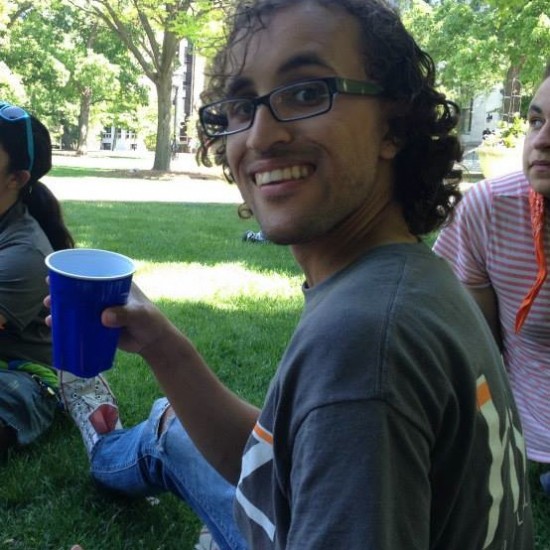
Marley-Vincent Lindsey is a freelance writer and independent researcher located in New York. He recently graduated from the University of Chicago with a degree in history and is primarily interested in 16th century Colonial Spain, the influence of Christianity on colonial institutions, subaltern studies and postcolonial theory and the relationship between digital media and history. He will be presenting at the Sixth Annual Conference on Power and Struggle hosted by the University of Alabama, and is publishing a paper entitled “The Politics of Pokémon: Socialized Gaming, Religious Themes and the Construction of Communal Narratives” in the forthcoming volume of Heidelberg Journal of Religions on the Internet. When he’s not on the academic grind, he’s probably playing Starcraft and other related strategy games, skating or thinking about contingency plans for the zombie apocalypse. He can be contacted via email ([email protected]) or through his notebook-blog (mvlindsey.wordpress.com). He also really likes cats.


(due to an abundance of spam, we’ve had to turn off comments here, but please head over to our Facebook page - we’d love to hear and share your thoughts there! facebook.com/MixedRootsStories)

The Politics of Multi-Racial Identity - Part 3 of 4

This section requires a brief moment of intellectual self-aggrandizing, and I apologize for that, but how race impacted my high school experience can only be understood in the context of what my high school meant for the city on a whole. Stuyvesant High School, initially founded as a trade school for boys in 1904, is a name with real power in New York. This power came from the expectations of a student going to Stuyvesant: it was an academic pressure cooker, a sink-or-swim environment and a feeder for the Ivy League and top-tier universities worldwide. Multiple schools like MIT, UChicago, Yale and Harvard employ admissions officers whose specific jobs are to deal with the Stuyvesant application pool. We boast multiple Nobel prize winners, Fields Medals, Intel Science Search winners, and influential alumni both in and out of the academy.

These are the sorts of things one might expect from an affluent private school. They are not common for a public high school with a majority of students qualified for free or reduced lunch. The element of economic diversity for Stuyvesant, combined with its role as a stepping-stone for a number of first generation immigrants led to its place as a source of constant pride for New York. A group of talented and ambitious low-income kids who, based on a single test, are admitted into the “elite” company of students who attend the school.

The question on the table is whether this economic diversity was enough to speak for one of the largest racial divides in high schools across the country. Eleanor Archie, an Assistant Principal during my time at Stuyvesant, was quoted as referring to the 11 black students admitted in 2013 as the fewest she’d seen in the 20 years she’d been there[1]. Currently, the school is 72% Asian, 21% White, 1% African American and 2% Hispanic. Black and Hispanic enrollment has been declining for a variety of reasons, some of which include former principal Stanley Teitel’s decision to end Summer Discovery, a program that allowed underscoring students to attend classes over the summer to earn an admissions slot. The Summer High School Institute, a program designed to help bolster underrepresented minorities, has seen a slew of budget cuts since its inception. Outreach to schools zones like District 7, poor and with few resources, is minimal, while normal support networks like families and communities come to the growing understanding that schools like Stuyvesant were never meant for them.

Whenever I brought up this astounding lack of representation for African Americans, Indigenous or Hispanic groups, I often received the response that Stuyvesant was diverse where it matters—in terms of class. What this economic diversity showed was that anyone could make it to my high school, and that the lack of racial diversity indicated a cultural problem within those racial categories. This was an objection essentially rooted in Marx. When he wrote that history was “hitherto existing society is the history of class struggles”[2], he was not ignoring the colonial legacy of the early 19th century. He was placing that legacy as a direct problem of the economic ramifications of colonial rule. Colonial Marxists, like Frantz Fanon, could be seen in turn as developing these relationships as subject to the one of capital.

It is fascinating, then, that the philosophy of Marx is used in a conservative sense. The status quo of Stuyvesant is fully operational so long as it continues to subvert traditional classist assumptions about the role of income in determining long-term prospects. Setting this remark aside, these responses also demonstrate how racial comprehension failed in this environment where racial diversity was stratified. The discussion of “cultural problems”, for example, ignores a long history in which education was a valued characteristic, and how it steadily became de-valued as a function of racial discrimination. Any cursory glance at the rise and fall of Black Wall Streets demonstrate this. Further, the lack of serious representation within such an environment rapidly pushed discussions past points where they would normally be called out on their directly racist mentalities. As it is, the rationalizations created by classmates when a number of white male students created a video targeting a black female classmate based on race and gender reveal is astounding[3].

But here is a point where my experience as Multi Racial diverged from traditional minority narratives. The fact that I was also Chinese as well as Jamaican meant that the discomfort triggered by racial episodes also included the flattening of Asian experiences at the school. The same New York Times article that lamented the loss of African Americans at Stuyvesant would also hint that Asian representation was too high[4]. Descriptions of the Asian population as “invading”, or as particular Asian students as functionally equivalent contributed to an odd discourse in which no minority was really safe from critique. There was, of course, usually one face to represent Asian Americans at Stuyvesant: a Chinese one. This is despite the conceptual boundary between populations of people like Indians, Afghans, and Pakistanis and what American consciousness conceptualizes as “Asian”. As an example, it was not Chinese Americans who were targeted after 9/11. What’s more, the difficulties for some students in terms of being first generation, or largely lower class tend to be ignored when constructing this monolithic entity of “Asian”. It was almost as Asian-ness gave its beholder some sort of super power, which rendered the model minority myth and the elements of discrimination with which it is associated irrelevant.

In a world where all people are monoracial, the polarizing nature of model minority versus under represented minority may have been discomforting, but probably did not trigger existential crises. Was I taking advantage of one identity to bolster another? Is this an acceptable way to further underrepresentation? Am I a sell-out? I was expected to have fully developed answers to these questions by the age of 14, and as soon as I began talking about these things, I could expect my peers on both sides to remind me that I was not “Black” nor “Chinese” nor “White”. Paradoxically, I was also expected to “pick” a side, regardless of how well my peers policed those conceptual boundaries. One classmate, for example, insisted on reminding me that college admissions, would only see me as African American. And since my classmate’s impression of African American was uniformly that of the inner city, gangs and violence, I had no right putting that down on my application.

These sorts of statements were deeply ironic. I wasn’t Black enough to make it acceptable for college applications, but I was Black enough for girls to explicitly mention that their fathers would kill me if I touched them. I was Black enough to transform into an expert on slavery, reparations and segregation in the inner city for classes that could be devoid of darker faces. But, for whatever reason, I was challenged to put down only “Chinese” or “Chinese and White” on college applications. The fact that I had the audacity to identify with all parts of my empirical identity was a challenge in the atmosphere of hyper-competitive college admissions season.

I pre-empted this section by asserting that what mattered less was the empirical reality of race, and more what people saw of me. The signifier shifted from my mother, to what conceptual expectations my classmates had of particular racial distinctions, and where I stood in regards to expectations. This was also true of the world at-large. Prior to my arrival at Stuyvesant, people normally guessed at my ethnicity as “some kind of Latin American”. If they knew I went to Stuyvesant, these guesses shifted to “Middle Eastern, or maybe Jewish”. I had little say in how I was perceived, or what was assigned to me. In multiple areas of institutional applications, I had to pick whatever ethnicity I best identified with, and I doubt Stuyvesant included my cross-out of the Scantron bubbles, and the write-in, “Multi Racial” as an option in its report to the Board of Education.

While my identity was not directly negated in high school, it was undermined at many turns. However, I recognized the source of that undermining as classmates who, for the most part, had their own systemic problems with which to deal. I rejected class as the primary point of tension, but a majority of us knew and understood the experience of being low-income as a large difficulty. A number of friends were frustrated by a lack of understanding as to why affirmative action helped make a level playing-field, but I found it easier to discuss with my high school classmates, a majority of which had their own problems navigating the racial hierarchy.

The transition to the University of Chicago thus became a similar marker. I had spent eighteen years in New York, living amongst an incredibly diverse array of experiences in gender, race, class and orientation. Chicago, despite its “quirky” reputation, was largely an engagement with normativity in every respect. I had seen stereotypes of what life was like West of the Hudson River, but I had little real experience in engaging with that world. Unfortunately, there was little warning that I would be expected to engage individuals who had as little experience in diversity as I had in normativity.


By: July 2014 Guest Blogger- Marley-Vincent Lindsey

Marley-Vincent Lindsey is a freelance writer and independent researcher located in New York. He recently graduated from the University of Chicago with a degree in history and is primarily interested in 16th century Colonial Spain, the influence of Christianity on colonial institutions, subaltern studies and postcolonial theory and the relationship between digital media and history. He will be presenting at the Sixth Annual Conference on Power and Struggle hosted by the University of Alabama, and is publishing a paper entitled “The Politics of Pokémon: Socialized Gaming, Religious Themes and the Construction of Communal Narratives” in the forthcoming volume of Heidelberg Journal of Religions on the Internet. When he’s not on the academic grind, he’s probably playing Starcraft and other related strategy games, skating or thinking about contingency plans for the zombie apocalypse. He can be contacted via email ([email protected]) or through his notebook-blog (mvlindsey.wordpress.com). He also really likes cats.


(due to an abundance of spam, we’ve had to turn off comments here, but please head over to our Facebook page - we’d love to hear and share your thoughts there! facebook.com/MixedRootsStories)

The Politics of Multi-Racial Identity - Part 2 of 4

My childhood area of New York bordered the remnants of the Puerto Rican Loisaida, and edges of Chinatown. As a result, our class was a mix of working class Asians and Latinos, along with Italians and African Americans. My kindergarten class was a reflection of this composition, which would have made any proponent of diversity happy. Our cognition of race at this point was limited to what we interacted with in reality. We could perceive a correlation of skin color to racial identity—lighter individuals being white, and darker individuals being black, with Asians and Latinos having their own looks—and this correlation was hammered home by interactions with the families of students. If one’s identity was not made immediately clear by their body, the sign to be read was the body of the person who was generally responsible for the student.

This is where the fluidity of my own racial identity began. In my mind (and the minds of my five year old peers) I was white. My skin color might have identified me as Latino, but my mother was a working class, Western European woman and that identity became my own. Indeed, my first memory of directly engaging race was mentioning to my mother something about how I was white. To which she responded that my impression was a half-truth; I was part white, but my dad was also Jamaican and Chinese.

This was not the biggest surprise in my mind. I was cognizant of a difference between my mother and myself, but this difference was brought out by social interactions. What enforced the conclusion of my whiteness in the classroom was the presence of my mother, a white woman. However, this was not enough for all people outside the classroom and it was the interactions with these people that made me suspect there was more to my identity. A prime example: there was a park near our apartment in which I regularly played. While the children played on the jungle gym, or by the sprinklers, our parents would gather and have the sorts of conversations adults have. Years later, my mom informed me about the subject of one such conversation: another white mother had seen me with my mother, and was not deceived. Thus, once I was out of earshot, she asked, “Where did you get him from?” This woman thought that my mother had a contact with a Latin American adoption agency.

It was not a moment of malicious racism, and the woman became apologetic upon realizing that we were indeed biologically related, but it did reflect a number of normative assumptions she had made and was comfortable with sharing in public. Her question did not entertain the notion that a biological relation was possible—it made the normative assumption as one of adoptive kinship. This is reflective of a historical consciousness in which the world makes more sense maintaining the strict lines that bind our conceptual categories of race to empirics, rather than suggesting that the lines between them could change.

Of course, it is difficult to say whether biological relations ought to be presumed as normative ones for society, but what I wish to highlight is the selective standard by which this question of normativity is raised. It was not any other relation between child and parent that was question—it was my mother and myself. This is a question continually raised by people who think they are clever: “How do you know what you are if you never knew your dad?” The separation of empirical verification and conceptual trust is one that exists in every parental relationship. For all any of these people know, their parents had lied about being their parents, and were actually ex-KGB operatives. These explanations are rejected because they seem more complex and difficult to maintain. However, when it comes to multi-racial identity, everything that does not have immediate empirical verification, is available for strict scrutiny.

These forms of “benign” racism were equally prominent within my peer group. In fact, by 2nd grade, my peers had become incredibly good at creating groups based on ethnicity, and policing those lines. Throughout my interaction with Asian friends, for example this was a common response I would receive when they heard I was Chinese: “No you’re not. You don’t look it!” This was another simple negation, one that seems benign, as it came from seven year olds with little world experience. We would expect this of children in the same way we might expect a child to disbelieve in purple potatoes until presented with one. But people are not potatoes, and this was indicative of a larger problem—namely the inability to differentiate between races beyond empirics. These early experiences with empirical validation of race would later be the source of my peers’ conceptual ideas of race. This wasn’t a failure of the individual, but one in which the American state itself has been incapable of understanding racial lines, both conceptually and empirically, as moving targets.

When a student learns history in elementary school, the typical revisionist charge is this history is the “old dead white dude” variant of history. My only contribution to this discussion is that even in the most virulent threads of historical fantasy, in which the Civil War was one of “Northern Aggression” there is some acknowledgment that other races existed, if only to be subservient to the white one. Yet, both revisionists and traditionalists police these very lines that we learned as children: races do not mix. Even the more progressive histories, based on popular historians like Howard Zinn, still spend very little time pointing out that Multi Racial identities exist[1]. And when this absence of mention is combined with the tradition of separation, it is no surprise that children cannot conceptualize Multi Racial identity as something possible. My identity was practically a unicorn—non-existent.

Part of this erasure is a refusal to engage with the reality in which we exist, and the history behind it. In middle school, our humanities curriculum was well developed, with emphasis on primary sources, and even a trip to the NY Supreme Court to argue the case for slave reparations. But there was always a sense that we were playing with dead ideologies—this court case was partially imaginary, in the sense that none of us were forced to consider race as an element of the present. I remember some peers being very surprised to hear that racism still existed as a politically powerful force, as though racism ended with Brown vs. Board of Ed. The failure of our humanities education was the inability to link this history with the social structures of the present[2].

This connection was made for seldom few of us as children, but I would suggest that the living experience of dealing with racial discrimination, combined with the historical knowledge of the past (and here, parents become teachers as well—for example, people who fought for civil rights) means that non-white children make this connection much more quickly. There are a variety of studies that show white students tend to be less aware of race as a profoundly influential factor in the possibility of advancement. By denying these connections, or at least failing to address them, the later work of “diversity” becomes exponentially harder—something I will return to in a later post.

My first engagements in which my peers became actively aware of the political stakes for race-thinking, and the ideologies it spawns was in high school. This began a long journey, one in which I had to begin navigating how I wanted to identify, and as what others wanted me to identify. I will go more into detail about this process later, but I will close with the basic distinction between my early childhood days, and my life as a teenager.

As a child, my identity as Multi Racial appeared to have few stakes involved. My mom, as a sign, meant passing was imposed upon me, and while moments of tension surfaced when this sign was challenged, they meant little in the grander scheme of my own opportunities. Yet, it wasn’t as simple as a conscious decision to act and appear white at all times. I still interacted with my peers, expecting them to accept my racial identity as empirically valid, regardless of the conceptual construction of my educational trajectory as white.

At a high school where the distance between my empirical and conceptual identities began to grow wider, the stakes became raised. No longer was the question whether I actually was Jamaican, or Chinese, but whether I had the right to claim that identity as my own. My peers became less concerned with the empirical, and more concerned with the conceptual.


[1] Howard Zinn’s A People’s History of the United States has become the standard form of popular marginalized histories: http://www.thegoyslife.com/Documents/Books/A%20People’s%20History%20of%20the%20United%20States-%20Howard%20Zinn.pdf .

[2] The literary scholar Gayatri Spivak has some powerful words on the role of the humanities in education within this lecture: http://www.youtube.com/watch?v=2ZHH4ALRFHw .


By: July 2014 Guest Blogger- Marley-Vincent Lindsey

Marley-Vincent Lindsey is a freelance writer and independent researcher located in New York. He recently graduated from the University of Chicago with a degree in history and is primarily interested in 16th century Colonial Spain, the influence of Christianity on colonial institutions, subaltern studies and postcolonial theory and the relationship between digital media and history. He will be presenting at the Sixth Annual Conference on Power and Struggle hosted by the University of Alabama, and is publishing a paper entitled “The Politics of Pokémon: Socialized Gaming, Religious Themes and the Construction of Communal Narratives” in the forthcoming volume of Heidelberg Journal of Religions on the Internet. When he’s not on the academic grind, he’s probably playing Starcraft and other related strategy games, skating or thinking about contingency plans for the zombie apocalypse. He can be contacted via email ([email protected]) or through his notebook-blog (mvlindsey.wordpress.com). He also really likes cats.


(due to an abundance of spam, we’ve had to turn off comments here, but please head over to our Facebook page - we’d love to hear and share your thoughts there! facebook.com/MixedRootsStories)

The Family Pangaea

With a rich heritage rooted in various parts of the globe, Pangaea comes to mind when pondering our sons’ racial make-up. For the sake of simplification, we call Raf & Armand bi-racial, or multicultural since listing African, Native American, German, Italian, Scots-Irish & Mexican seems a bit long-winded. In addition, given the strong tendency towards fragmentation - culturally speaking that is - Pangaea aptly symbolizes the primordial unification of Earth’s land masses and therefore, humanity. As stated in an earlier exploration titled, “I’m What?… ” my husband and I are on a mission to raise our sons to be whole, happy and positive contributors on this planet. And it’s about as general yet complex as it sounds. The notion of wholeness & embracing one’s full self is a work in progress, as we parents strive to follow suit in our own lives. Just what does it mean to be a man, woman, child, American, White, Black, and plain old human? I imagine many would agree that these are some seriously loaded questions, which brings me right back to that über ancient supercontinent that began to break apart about 100 million years ago. The massive drift largely responsible for the current global landscape laid the framework for the myriad of (often clashing) cultures & colors also known as contemporary humanity.

Referring to our young, loving, energetic duo, that which has been likened to a mixed bag of multicultural goodness also embodies the fundamental essence of human equality and oneness. The ever-evolving face of Mama Earth vividly illustrates the awesome beauty of inter-connectedness, and we pray, takes root in the burgeoning of a healthy sense of cultural identity for our beloved boys.

By: May 2014 Guest Blogger - Sky Obercam

skyphoto

Born & raised in Philly, Sky currently resides in the San Francisco

Bay Area. A full-time mamma, and creative spirit, she’s lent her voice

to The Source, Format Magazine, Bossip, Black Web 2.0, Vibe Vixen,

Frugivore, XO Jane and co-founded art & culture blog,

Visual Culture. Peep her blog, Mindless Culture vs. Sky Obercam, for

updates on new (and hopefully exciting) endeavors, as well as

entertaining tid-bits, info, and arbitrary rantings from the

self-proclaimed eccentric.

(due to an abundance of spam, we’ve had to turn off comments here, but please head over to our Facebook page- we’d love to hear and share your thoughts there! facebook.com/MixedRootsStories)

Why do humans perceive an Other and does it Matter?

A challenge of the human condition is overcoming bias from others and from within ourselves. One very problematic bias is the Other-Race Effect. We categorize people based on assumed racial features as either Us or Other. Why does this happen? The oft political response is that people or societies are racist , but that answer does not satisfactorily answer the question.

For me, this kind of question demands that we focus on the evolutionary origin of the trait?” Finding the root is an effective means of understanding causation then working towards changing the effect (i.e. outcome). That is why I found Ross Pomeroy’s, commentary in Big Think on the subject of “The Other Race Effect” intriguing.

Pomeroy clearly articulates why the issue should be studied, then highlights research that offer the most promising hypothesis for why we do it. Finally, he closes with answers to the most important question, “Is there any way to prevent or minimize the Other-Race Effect?” Pomeroy’s response is, yes. As he reports:

If infants regularly see and interact with people of other races before nine months of age, the Other-Race Effect may never emerge. But for those who are already inept at distinguishing between people of other ethnicities, don’t fret, there’s still hope. According to University of London psychologist Gizelle Anzures, “the Other-Race Effect can be prevented, attenuated, and even reversed given experience with a novel race class.”

Storytelling is a fundamental to human interaction and can be an effective means of overcoming bias, but stories work best when shared in a safe space. Mixed Roots Stories provides an online platform for sharing and engaging with stories. What is your story?