
The Politics of Multi-Racial Identity - Part 2 of 4

My childhood area of New York bordered the remnants of the Puerto Rican Loisaida, and edges of Chinatown. As a result, our class was a mix of working class Asians and Latinos, along with Italians and African Americans. My kindergarten class was a reflection of this composition, which would have made any proponent of diversity happy. Our cognition of race at this point was limited to what we interacted with in reality. We could perceive a correlation of skin color to racial identity—lighter individuals being white, and darker individuals being black, with Asians and Latinos having their own looks—and this correlation was hammered home by interactions with the families of students. If one’s identity was not made immediately clear by their body, the sign to be read was the body of the person who was generally responsible for the student.

This is where the fluidity of my own racial identity began. In my mind (and the minds of my five year old peers) I was white. My skin color might have identified me as Latino, but my mother was a working class, Western European woman and that identity became my own. Indeed, my first memory of directly engaging race was mentioning to my mother something about how I was white. To which she responded that my impression was a half-truth; I was part white, but my dad was also Jamaican and Chinese.

This was not the biggest surprise in my mind. I was cognizant of a difference between my mother and myself, but this difference was brought out by social interactions. What enforced the conclusion of my whiteness in the classroom was the presence of my mother, a white woman. However, this was not enough for all people outside the classroom and it was the interactions with these people that made me suspect there was more to my identity. A prime example: there was a park near our apartment in which I regularly played. While the children played on the jungle gym, or by the sprinklers, our parents would gather and have the sorts of conversations adults have. Years later, my mom informed me about the subject of one such conversation: another white mother had seen me with my mother, and was not deceived. Thus, once I was out of earshot, she asked, “Where did you get him from?” This woman thought that my mother had a contact with a Latin American adoption agency.

It was not a moment of malicious racism, and the woman became apologetic upon realizing that we were indeed biologically related, but it did reflect a number of normative assumptions she had made and was comfortable with sharing in public. Her question did not entertain the notion that a biological relation was possible—it made the normative assumption as one of adoptive kinship. This is reflective of a historical consciousness in which the world makes more sense maintaining the strict lines that bind our conceptual categories of race to empirics, rather than suggesting that the lines between them could change.

Of course, it is difficult to say whether biological relations ought to be presumed as normative ones for society, but what I wish to highlight is the selective standard by which this question of normativity is raised. It was not any other relation between child and parent that was question—it was my mother and myself. This is a question continually raised by people who think they are clever: “How do you know what you are if you never knew your dad?” The separation of empirical verification and conceptual trust is one that exists in every parental relationship. For all any of these people know, their parents had lied about being their parents, and were actually ex-KGB operatives. These explanations are rejected because they seem more complex and difficult to maintain. However, when it comes to multi-racial identity, everything that does not have immediate empirical verification, is available for strict scrutiny.

These forms of “benign” racism were equally prominent within my peer group. In fact, by 2nd grade, my peers had become incredibly good at creating groups based on ethnicity, and policing those lines. Throughout my interaction with Asian friends, for example this was a common response I would receive when they heard I was Chinese: “No you’re not. You don’t look it!” This was another simple negation, one that seems benign, as it came from seven year olds with little world experience. We would expect this of children in the same way we might expect a child to disbelieve in purple potatoes until presented with one. But people are not potatoes, and this was indicative of a larger problem—namely the inability to differentiate between races beyond empirics. These early experiences with empirical validation of race would later be the source of my peers’ conceptual ideas of race. This wasn’t a failure of the individual, but one in which the American state itself has been incapable of understanding racial lines, both conceptually and empirically, as moving targets.

When a student learns history in elementary school, the typical revisionist charge is this history is the “old dead white dude” variant of history. My only contribution to this discussion is that even in the most virulent threads of historical fantasy, in which the Civil War was one of “Northern Aggression” there is some acknowledgment that other races existed, if only to be subservient to the white one. Yet, both revisionists and traditionalists police these very lines that we learned as children: races do not mix. Even the more progressive histories, based on popular historians like Howard Zinn, still spend very little time pointing out that Multi Racial identities exist[1]. And when this absence of mention is combined with the tradition of separation, it is no surprise that children cannot conceptualize Multi Racial identity as something possible. My identity was practically a unicorn—non-existent.

Part of this erasure is a refusal to engage with the reality in which we exist, and the history behind it. In middle school, our humanities curriculum was well developed, with emphasis on primary sources, and even a trip to the NY Supreme Court to argue the case for slave reparations. But there was always a sense that we were playing with dead ideologies—this court case was partially imaginary, in the sense that none of us were forced to consider race as an element of the present. I remember some peers being very surprised to hear that racism still existed as a politically powerful force, as though racism ended with Brown vs. Board of Ed. The failure of our humanities education was the inability to link this history with the social structures of the present[2].

This connection was made for seldom few of us as children, but I would suggest that the living experience of dealing with racial discrimination, combined with the historical knowledge of the past (and here, parents become teachers as well—for example, people who fought for civil rights) means that non-white children make this connection much more quickly. There are a variety of studies that show white students tend to be less aware of race as a profoundly influential factor in the possibility of advancement. By denying these connections, or at least failing to address them, the later work of “diversity” becomes exponentially harder—something I will return to in a later post.

My first engagements in which my peers became actively aware of the political stakes for race-thinking, and the ideologies it spawns was in high school. This began a long journey, one in which I had to begin navigating how I wanted to identify, and as what others wanted me to identify. I will go more into detail about this process later, but I will close with the basic distinction between my early childhood days, and my life as a teenager.

As a child, my identity as Multi Racial appeared to have few stakes involved. My mom, as a sign, meant passing was imposed upon me, and while moments of tension surfaced when this sign was challenged, they meant little in the grander scheme of my own opportunities. Yet, it wasn’t as simple as a conscious decision to act and appear white at all times. I still interacted with my peers, expecting them to accept my racial identity as empirically valid, regardless of the conceptual construction of my educational trajectory as white.

At a high school where the distance between my empirical and conceptual identities began to grow wider, the stakes became raised. No longer was the question whether I actually was Jamaican, or Chinese, but whether I had the right to claim that identity as my own. My peers became less concerned with the empirical, and more concerned with the conceptual.


[1] Howard Zinn’s A People’s History of the United States has become the standard form of popular marginalized histories: http://www.thegoyslife.com/Documents/Books/A%20People’s%20History%20of%20the%20United%20States-%20Howard%20Zinn.pdf .

[2] The literary scholar Gayatri Spivak has some powerful words on the role of the humanities in education within this lecture: http://www.youtube.com/watch?v=2ZHH4ALRFHw .


By: July 2014 Guest Blogger- Marley-Vincent Lindsey

Marley-Vincent Lindsey is a freelance writer and independent researcher located in New York. He recently graduated from the University of Chicago with a degree in history and is primarily interested in 16th century Colonial Spain, the influence of Christianity on colonial institutions, subaltern studies and postcolonial theory and the relationship between digital media and history. He will be presenting at the Sixth Annual Conference on Power and Struggle hosted by the University of Alabama, and is publishing a paper entitled “The Politics of Pokémon: Socialized Gaming, Religious Themes and the Construction of Communal Narratives” in the forthcoming volume of Heidelberg Journal of Religions on the Internet. When he’s not on the academic grind, he’s probably playing Starcraft and other related strategy games, skating or thinking about contingency plans for the zombie apocalypse. He can be contacted via email ([email protected]) or through his notebook-blog (mvlindsey.wordpress.com). He also really likes cats.


(due to an abundance of spam, we’ve had to turn off comments here, but please head over to our Facebook page - we’d love to hear and share your thoughts there! facebook.com/MixedRootsStories)
The Politics of Multi-Racial Identity -Part 1 of 4

Race-thinking has two distinct aspects: the real, and the conceptual. Both of these are important in the development of the racial politics of identity. These politics surround both what we know to be true about race (the real) and what we are taught corresponds to that reality (the conceptual). What these aspects have in common is their role as signifiers in the categorization of people both for the state and the individual. Stuart Hall suggested that the entire construction of race was an exercise in turning the body into a text, something that is neat and well defined, in order that we might better understand it[1]. Skin color, and the physical associations based on that color, become signifiers that we use to organize and categorize groups of people in a way that is convenient for a plurality of the population. If this idea is taken with some merit, then we can say that a whole series of problems in discussions of race are problems of language. When we argue about stereotypes, negative or positive, we are arguing about how accurately we have read people in the context of the state. The confirmation of stereotypes represents a successful unification of the real with the conceptual.

The need to categorize is not exclusive to race-thinking; it is how we make sense of information. Without classifications and groupings, we are left with a variety of data that have little meaning behind them. Yet, if we look at race-thinking as a series of signs within language, then the importance of categorization is open to another set of problems. These are problems of relative identity. The French philosopher, Jacques Derrida, perceived language as a series of signs that were ultimately relative[2]. Particular words gained their significance only when defined in relation with their antithesis: “open” only really means something when compared with “closed”, “up” with “down”, and so on. “White” and “Black” is another example of these antithetical pairs. A long history is associated with these colors, and their applications. As one example, Augustine in the 5th century CE used the concept of light—another synonym for white—and the fall from light to denote those who maintained piety, and those who fell into sin, respectively.

“White” and “Black” as historical terms gained power within the conceptual that has never been fully developed. This history is also what complicated issues that made the line between them less distinct. And here, Multi Racial identities become actively political. To have someone who physically embodied White and Black is to actively challenge not simply the hierarchy, but the categorizations themselves. This was the reasoning behind legal prohibitions of miscegenation, as well as social de-valuations of Multi Racial Subjects. As Frank Furedi noted, in ”How Sociology Imagined Mixed Race”: “The research agenda of the emerging race relations industry was dominated by the imperative of damage limitation”. This policy began with the interactions of the Americas with Europe, and continued up to policing commercials for Cheerios[3]. It relied on lines that could be imposed and enforced to the point that policing boundaries became subconscious. Edward Said’s process of Orientalizing the East is another way of formulating the creation of this category. Orientalism is a way of creating such conceptual categories, where lines are very clearly defined in the subconscious, although they may be difficult to articulate—we might recall Justice Stewart on pornography: “I shall not today attempt further to define the kinds of material I understand to be embraced with that shorthand description; and perhaps I could never succeed in intelligibly doing so. But I know it when I see it”.

The political power of these subjects, of course, has been subverted to serve the role of structural power. As Antonio Gramsci asserted, the culture of the powerful became the culture of the state. Those whose identities challenged this cultural form of hegemony were inevitably perceived as political. The scholar of the Classical World, or that of 18th century poetry is able to conceal political identity to her writings in a way that is never accessible to those whose histories were based on a past of permanent dislocation. We might say the “white” category has been established as default. As a result, those who study white areas cannot be said to be political—they seek to understand the history of our world. And yet, even structures have their politics. As Edward Said noted in Orientalism: “No one has ever devised a method for detaching the scholar from the circumstances of life, from the fact of his involvement (conscious or unconscious) with a class, a set of beliefs, a social position, or from the mere activity of being a member of a society”.

In this sense, the multi racial subject is paradoxically both political and apolitical. Within reality, her appearance is not enough signage to read her as belonging to the white or black category. However, her very existence is testimony to the long struggle at the periphery of such well-formulated categories. This means the mixed race identity is one that is always partially compromised: “What are you?” is less offensive for its depersonification and more for its historical erasure. Those who do not fit neatly in structured conceptions of race and culture do not belong, and need to be modified to fit with the worldview: “No, you can’t be Chinese!” the implication being that it violates some natural law of civilization.

What can we do about this problem? Our current solution, grounded in the empirical sense of what is feasible, suggests that it is merely a problem of experience. The whole debate about diversity is that experiencing the “real” aspects of people is enough to shift the “conception” of people[4]. There is no doubt that this must be part of the solution, however, it is not as simple as merging the boys and girls at a middle school dance. The beauty of ideologies is that they maintain their powers not simply in the real experiences of people, but also in how those people conceptually engage with categories through structures. As Arendt noted, part of the process of opinions turning into ideologies is this: “The appeal of both [in reference to history as an economic struggle of classes and as a natural fight of races] to large masses was so strong that they were able to enlist state support and establish themselves as official national doctrines”[5]. In short, factual blind spots that are tacitly endorsed by state action do not disappear through rectification. The larger ideological traces must be addressed as well.

I would like to show how a different approach to education is necessary, through my own experiences. While the origins of the problem in racial hegemony is similar to that of most minorities, there is still a unique encounter of the Multi Racial Subject as merging the expectations and identities of these two conceptual categories of “White” and “Black”. Just how fluid their assignment is can be seen in our own president, and his own struggle to fluctuate between seeming “Black” in some parts of his real struggle (encounters with police, for example) but also acknowledging his “Whiteness”. It is a microcosm of the multi-racial struggle on a whole, one whose solution is best presented in the words of Said: “All systems of education alas are still deeply, sometimes unconsciously, nationalistic. So I think we have to de-nationalize education and realize, and make it possible for people to understand that we live in a very complex and mixed world in which you can’t separate cultures and civilizations from each other but, in fact, history ought to be taught as the exchange and of course the clash of civilization”[6]. This process of nationalization includes a history by which we are invested in separating these categories, which cannot be so easily done in the context of the Multi Racial Subject.

I propose that my own experiences bear out to a more pressing issue—the socialization of racism. Children are aware of the racial boundaries that separate us, when they are a concern of those children’s realities. And they mirror the same sort of boundaries without consciously being aware of what they are doing. This is because they see the structures around them, and understand those structures to be models. A true humanities education is one in which the structures themselves become the subject of inquiry as much as any one particular subject. As a recent New York Op-Ed summarized: “Duncan said that Americans tended to be “ahistorical” — that is, we choose to forget the context of our past, perhaps as a way for a fractious nation of immigrants to get along.”[7] This context is essential, if we seriously seek to reform how race-thinking defines the worlds in which we inhabit.

A couple of warnings: one, these are my experiences. As such, I have little protection from the sort of critical cross-examination that is necessary for any sociological proposal. I don’t think of this as an answer—if I am lucky, it is the beginning of a question. The second is that, as I am a cisgender, heterosexual, male, several large aspects of identity are mostly put to the side. I don’t mean for them to be unimportant—rather, I have no serious experience being a minority in any of these camps, and would rather, like Foucault to the prisoners, “let them speak for themselves”. It is my belief each could write a narrative similar to my own, and those with multiple aspects could note the role of intersectionality in these debates.


[1] Stuart Hall, “Race as a Floating Signifier”: http://www.youtube.com/watch?v=bRk9MZvOd2c

[2] As an informal guide, the Wiki page on Deconstruction is helpful: http://en.wikipedia.org/wiki/Deconstruction#From_diff.C3.A9rance_to_deconstruction

[3] For this particular commercial: http://www.youtube.com/watch?v=kYofm5d5Xdw . The comments had to be disabled.

[4] http://www.acenet.edu/news-room/Documents/BoardDiversityStatement-June2012.pdf . This statement is demonstrative of what is called “positivist” tendencies about diversity—its value is only determined by what it produces.

[5] Hannah Arendt, The Origins of Totalitarianism, published initially by Jovanovich in 1973, available here: https://ia600509.us.archive.org/7/items/originsoftotalit00aren/originsoftotalit00aren_bw.pdf .

[6] This was a review of Samuel Huntington’s Clash of Civilizations, given by Edward Said in a lecture. For the transcript: http://www.mediaed.org/assets/products/404/transcript_404.pdf . For the lecture itself: http://www.youtube.com/watch?v=aPS-pONiEG8 .

[7] Timothy Egan, “Lost in the Past” http://www.nytimes.com/2014/05/23/opinion/egan-lost-in-the-past.html?hp&rref=opinion&_r=1 .


By: July 2014 Guest Blogger- Marley-Vincent Lindsey

Marley-Vincent Lindsey is a freelance writer and independent researcher located in New York. He recently graduated from the University of Chicago with a degree in history and is primarily interested in 16th century Colonial Spain, the influence of Christianity on colonial institutions, subaltern studies and postcolonial theory and the relationship between digital media and history. He will be presenting at the Sixth Annual Conference on Power and Struggle hosted by the University of Alabama, and is publishing a paper entitled “The Politics of Pokémon: Socialized Gaming, Religious Themes and the Construction of Communal Narratives” in the forthcoming volume of Heidelberg Journal of Religions on the Internet. When he’s not on the academic grind, he’s probably playing Starcraft and other related strategy games, skating or thinking about contingency plans for the zombie apocalypse. He can be contacted via email ([email protected]) or through his notebook-blog (mvlindsey.wordpress.com). He also really likes cats.


(due to an abundance of spam, we’ve had to turn off comments here, but please head over to our Facebook page - we’d love to hear and share your thoughts there! facebook.com/MixedRootsStories)


MXRS reviews Belle

The Mixed Roots Stories team saw the new movie Belle on May 23, 2014. Below are some of our reviews of the movie!

20140523_200842


“Belle is a must see for fans of excellent storytelling! The movie direction was deftly handled by Amma Asante while ably assisted by the editing of Victoria Boydell and Pia Di Ciaula. At no point did I experience a moment that took me out of the story. Thankfully, they had an excellent script to work from by Misan Sagay. Finally, I have to state that the performances by Gugu Mbatha-Rau and Tom Wilkinson were pitch perfect. I really believed I was a fly-on-the-wall listening to the conversations of a family at particularly tense moments in their lives.” — Mark R. Edwards (Co Curator)

“If there is one message to take away from Bell, it has to be through the rising action of her assaulting her own flesh in frustration. How many of us can relate to, at any point, feeling uncomfortable in our own skin? The practice of systematically devaluing a life because of a concept of Race or privilege - a concept most, at one point in our lives, did not understand; nor, the reasons people can chastise and ostracize others for it while they believe it is in good conscience. It is a frustration we hope to suffer less from as time goes on. From beginning to end, Belle imbeds a persistent thought that reminds us how far we’ve come and how far we have to go toward not just an equal, but an acceptant society.” — Jonathan Andrew (Creative Technologist)

“In my opinion, the most thought-provoking moments in Belle are those instances where Dido tries to find herself in literature or art and laments that she does not relate to what she sees. Even today this lack of representation is relevant! Just how many films, books, or TV shows are made with the ‘others’ of society in mind? Not too many. It wasn’t until Dido allowed her story to be told (through the work of the painter) that she finally found herself in art. The story of Belle is one in which a mixed individual is dying to get her story, her experiences, and her astute observations out in order to change public opinion. Belle manages to beautifully capture those moments of progress and joy along with the moments of frustration and desperation that come with standing up for what you know is right. Belle is a wonderfully crafted film and is a must-see for 2014!” — Moya Márquez (Social Media Specialist)

“From start to finish, Belle was filled, with the complexities, created by society, that individuals of mixed heritage often face. It was refreshing to finally see these complexities portrayed honestly on film. Amma Asante artistically and boldly directs an amazing cast in the telling of this story, based on a true story. Though it is set in Britain, in 1769, I would argue that many of the themes of identity are relevant today for mixed individuals everywhere. I enjoyed seeing the bond of sisterhood presented between Dido (Belle) and Elizabeth, that was void of the social contamination of their racial differences; proving that family is not limited by blood. Belle demonstrates that people are people and all deserve to be treated with justice, fairness, and love no matter the color of their skin, or the lineage of their parents. It is about time that stories of mixed individuals are being told void of the stereotypes that have plagued the mixed race population in the past. It is my hope that future films will continue to tell stories with mixed race individuals, interracial couples/families, etc. Bravo, well done, and thank you!” — Chandra Crudup (Co Curator)

Have you seen Belle yet? If not, this is one to see! Share your thoughts about the movie on our Facebook and Twitter.

Loving v. Virginia Strikes Again

Please read Jonathan Capehart’s excellent article in the Washington Post on the recent decision by Mark Herring - the Commonwealth of Virginia’s State Attorney - to not defend the commonwealth’s ban on same-sex marriage. The significance of the story to the Mixed community is the reference to the precedent setting 1967 Loving v Virginia decision that anti-miscegenation laws are unconstitutional.

Personal note: In 1962 my parents had to marry in Washington D.C. because their other options of Maryland and Virginia had anti-miscegenation laws. Fast forward to today, I get to see some of my dearest friends marry their same-sex partners. “The arc of the moral universe is long, but it bends towards justice.” - Martin Luther King, Jr.


Online Directory of Race Research

The Center on Race and Social Problems at the University of Pittsburgh has developed a new Race Research Online Directory that provides more than 10 years of research at your fingertips.

http://www.crsp.pitt.edu/

“The center has always served as a leading resource for race-related research, but now it offers unprecedented access for students, educators, foundations, and government agencies whose work depends on good scholarship.

  • More than 100 videos of lectures from the speaker series, summer institutes, and the Race in America conference.
  • Pilot studies and other research projects at the center.
  • Hundreds of publications, including the journal Race and Social Problems.
  • Educational resources, such as a graduate course listings and award-winning student papers.
  • A listing of all center activities.”

The site includes the topic of “Interracial Group Relations.”

This resource is a great place for those who do academic work to gather information and possibly submit their work to expand the discussion on the Mixed experience.

This is also a great resource for those who need some background information and/or research to consider/include/inform the development of their Mixed Roots Stories!


‘Becoming Mexipino’ - A Story Worth Telling

Rudy P. Guevarra, Jr., discusses the mixed history and identity of two minority groups (Mexicans and Filipinos) in his book Becoming Mexipino: Multiethnic Identities and Communities in San Diego.

He weaves together the stories of Mexipinos in San Diego by exploring their families immigration to the United States, their fight for civil rights, participation and creation of labor unions, and socialization through cultural functions that brought couples of the two groups together.

“Thus, by examining the intimate, complex relationship between Mexicans and Filipinos in San Diego and exploring how they and their multiethnic children carved a place for themselves in the United States, we can begin to appreciate how identities and communities are formed, nurtured, and sustained over generations. Indeed, the multiple generations of Mexipinos are testimony to this unique history of multiethnic communities in the United States. It is a story worth telling.” (p. 12)

We agree! It is a STORY worth telling.

Becoming Mexipino: Multiethnic Identities and … - Amazon.com


Sharing stories through Cooking!

Food! It has a way of gathering people….families….friends…communities. Many favorite recipes are accompanied by a story that has been passed down through the generations. A recent blog post, Cooking Genes: Our Culinary Legacy on the Narrative Network, talks about the mixing of recipes that are brought from two different cultures in an a multiracial family. The author’s mother “loved to say that our food was delicious because we were a “mixed-up” family!”

http://yonarrative.com/cooking-genes-culinary-legacy/

This year Gloria Govan and Marlena Attinasi published A Mixed Girls Favorite Recipes.

“This cookbook is a collection of recipes that Gloria Govan and Marlena Attinasi have developed over the years of entertaining and raising their children. The Book is a sampling of our favorite recipes that are from the flavors of the cultures of our childhood, African American, Mexican and Italian. Some of the recipes we have named after our family members to honor them, as they have been an influence in our cooking styles and why we love food and entertaining. We are passionate about family and food being the center of every gathering. ” Find out more about the authors and order their book on their website http://www.mixedgirlsfavorites.com/


United States of the United Races - Great Resource for Storytellers

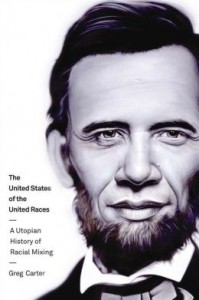
carterWhen discovering the strongest submissions for the Mixed Roots Film & Literary Festival, one thing always stood out for me: the storyteller (filmmaker, author, performer) had a solid understanding of the historical context behind the story they were telling. Although many of the personal narratives were compelling, it was often clear when the creator of the work hadn’t delved into the historical reasons why they found themselves in a certain time and space. This often made the work feel lacking in some way.

Enter Greg Carter’s United States of the United Races - an antidote to celebrations of the mixed experience that lack the important weight of context. The Introduction examines how President Obama - and many others - have capitalized on his being mixed, “he piggybacked onto positive notions about racially mixed people to improve his symbolic power.” Carter makes his goals for the book clear here: 1) to show that racial mixture has a long history of being touted as a way towards progress and 2) to question the notion that racial mixture automatically equals progress.

In the following 7 chapters the book follows a chronological order, revisiting some of the history you may have heard often, like Thomas Jefferson and Sally Hemmings, Plessy v. Ferguson, and also giving extensive details into lesser-discussed political and social leaders who addressed racial mixing like Wendell Phillips (who wrote the original United States of the United Races, from which Carter got his title), Albion Tourgée, José Vasconcelos and Jean Toomer.

Carter’s Conclusion leaves us with hope that mixed relationships - and the children/grandchildren, etc. produced by them - might help in achieving goals of equality. He includes a checklist - to ‘check ourselves’ on blindly seeing mixed people as the only saviors, and encourages a banding together - instead of separating ourselves - to insist on making changes.

I highly recommend this book, particularly to artists of all genres who want to address the mixed experience in their work. Even if your work does not directly refer to the past, understanding it better will certainly add depth to the stories you tell.

Here’s a PODCAST with Greg Carter discussing the book - hosted by Tiffany Ried of Mixed Race Radio.