Call for Guest Bloggers:

Call for Guest Bloggers:

I am Mixed. What does that mean? I do not know, because I have not fully explored my Mixed identity, during the last 30 years. Furthermore, until recently, I did not have a community/place to share my story and compare notes.
Please don’t misconstrue, I do experience otherness on a daily basis, but I function on autopilot as I engage with the different circles I operate in. It is always with strained tension between who I am, which has been fuzzy, and who I think people assume I am.
What do I say to people when they ask me “what are you?” (add your own version of this question). I reply, Irish (with emphasis), Portuguese (with emphasis), Native American (with emphasis), and African-American or African or Black (with apology). It hurts me to write this because of the painful experience of not belonging; an outlier like Pluto (after finding out it is not a planet).
As a male, I accepted my status with passive frustration, but hey, I thought to myself, that was my lot in life. Moreover, I had no desire for kids and I have no kids. Furthermore, I had the good fortune of only seriously dating people that did not want kids. Hence, I had no pressure of worrying about how my mixedness and their mixedness would impact our lives.
I mention this because most of the leaders in the Mixed movement are women, which I believe stems from their historical role as the primary caregiver for kids. Consequently, they’re more likely to be immersed in understanding and defining the terms of Mixedness to better help their offspring.
I’m Mixed, but now it is beginning to have meaning, because I’m immersed in the Mixed experience. I’m now writing and curating content for Mixed Roots Stories. I must admit it is a challenge to write about the Mixed experience, because it reveals my deepest insecurities around self-identity. So much so that I’ve been unable to write: suffering in silence.
No more. I need to talk and tell stories. Oy, I feel vulnerable.
It is a struggle, but sharing this story is a beginning.
For the most part I find it a pleasure living the mixed experience. I know the ‘What Are You’ question annoys some - and with good reason (I’m asked only because of my light skin, and the privilege that comes with that); but I often look at it as an opening for continued conversation (and occasional ‘schooling’) on the history of ‘race’ and racism. But THESE kinds of questions, I cannot tolerate. Here’s a great response from Miss Manners. How would you respond?
Miss Manners responds when a man is asked, “Where did you get your daughter?’
If you’re looking for more resources on this topic, check out our post on Becky Sarah’s book Grandmothering, which includes an entire chapter dedicated to families with mixed children. We also really like the podcast Is That Your Child - check out these resources when you have the chance!
http://www.journalnow.com/home_food/advice/article_102b269e-5624-11e3-a2da-001a4bcf6878.html
I was nine years old, racing around the mango tree in our front yard with my older brothers, when Ma’s throaty voice carried out to reach me. “Kesha, come on in here and get your hair combed.”
I took sluggish steps into our building, dawdling up the stairwell, hoping she found herself lost in a different task by the time I reached the second floor flat. She called me into the kitchen. Atop the stove, a roaring fire wrapped itself around a metal pressing comb. Ma stood behind a stool. “Sit,” she said, as she fiddled through the bag of combs, brushes, barrettes and containers of pomade. Moments later, I was wincing through her touch while she yanked at the mass of entangled curls on my head. She pulled out a small wooden comb, and fought through the knotted hair to find my scalp. She split the hair into four, kept them separated with elastic bands and slathered globs of coconut-scented grease onto a clump of hair. I waited to hear hissing sound as the heated comb kissed my dense curls.
“Be still,” my mother snapped, each time the comb pressed into my hair. She huffed, cursed with every tug and pull, and paused only to wipe sweat from her brow or smoke a cigarette. I felt as if the comb had been replaced by a knife and used to cut small gashes into my head. The blood would soon trickle down my face, I just knew, so I squealed through the wait. My brothers chuckled while they watched, twisting their faces to mock my tortured expression. After all the sweat and tears, the blood did not show. Both my ears had taken a few licks from the fired comb, and my forehead was marked in lines of red where the comb slipped a few times, but at least she was done. My mother handed me a mirror and spoke in a more subdued voice, “How you like it, baby?”
I stared at the strained and wet skin wrapped around my face, and saw anger behind my reddened eyes. I wanted to tell her I hated it, until I raised the mirror higher to see the loosened hair spilling past my shoulders. My hands went up to feel the heat emanating from my scalp, and my fingers slipped between the silky strands. A smile split my lips just then, and a boisterous laugh escaped. “I love it, Ma,” I said.
I did love it. Feeling more settled, I sat still as she parted the hair into two sections with a line running down the middle. After plaiting each portion, she clipped the ends with two butterfly shaped barrettes. I walked around the compound tossing my head from side to side just to feel my hair move. I sauntered through the backyard towards to the boy’s quarters where I knew the help congregated on Sunday evenings. It wasn’t long before one of the women called me beautiful and asked if my hair was real. The ultimate test was in the touch, her close inspection of the plait from start to finish for any attachments woven in. As she fingered my hair, she said to the woman standing beside her, “It is because her mother is Akata.” That woman nodded, and it was settled. I wanted to believe them, that my hair was in fact a product of my Black American mother’s ancestry. I would say nothing however, about the fiery experience that left my hair straight. I walked away smiling, believing that Ma’s foreign blood fed my hair differently, and gave it length unlike my friends who wore their hair shorn or in braids that ended in fuzzy tips at the nape.
No one ever called those girls beautiful. Girls with short hair did not show up in advertisements for shampoo or pomade, nor did they win the handsome guy in movies. Even without knowing what it meant to sit in society’s notion of idyllic beauty, I was in it and enjoyed the feeling. That was in 1986, in Lagos Nigeria. Three years later, I stepped off a plane in snowy Chicago after my parents’ split. Within months, I found myself at the bottom of the beauty slope, where more than just long hair awarded one the prize. I decided then, that beauty was neither a result of my hair style, nor in the way that others perceived me. When I looked in the mirror, I saw a tall, dark, and happy person who was shrouded in a blend of my mother’s generous smile and my father’s high cheekbones. I was beautiful to me, stunning in fact, to the only person whose opinion mattered.
As an adult, I relaxed my hair. Some said that black women who did this were self-loathers, aiming to look more white. I often laughed at the accusation. I was the color of roasted walnut, and spoke with a thick Nigerian accent, there was nothing I could do to defy my blackness or pretend I was white. I cut bangs to fit the trends, and watched my split ends spread until my head was a crown of brittle strings that required braids to help it flourish again. After a long break from chemical treatments, I twisted the coils into dreadlocks. I was now in a different arena when it came to my hair. Out of curiosity, people asked to touch my locks. Some wanted to know how I kept it clean, and a few requested a sniff test. At times, I was presumed to be a pot head or a rebel, a fighter for the black woman’s revolt against society’s expectations on beauty. I was none of those things. The look happened to be freeing, cost effective and less time consuming in my life as a working mother with two daughters. Seven years in, I felt trapped again in a façade of others’ expectations. I decided to shave my head, and wore it cropped for a while. These days, I have returned to pressing my hair. As a mother of four, I often wear it pulled into a pony tail and that works for me, for now.
I had never considered the evolution of my hair as an extension of myself, I simply wore my hair the way I wanted. Living in America, I now know that ones hair style says so much more about a person and often holds too much power over that person’s ability to just be.
When it was my turn as a mother braiding her child’s hair, I saw the sadness in my daughters’ eyes whenever I called them to sit for a braiding session. I saw them squirm and squeal at the behest of my touch, and I watched their tears recede and smiles blossom with relief when I was done. I too would ask, “Do you like it, baby?” They always did, but I walked away from those moments feeling conquered by the hair that I gave to them. They only know America as home, and have likely never felt that their hair was beautiful. It saddened me every time I saw them rise from between my feet, eager to flee from my touch. But this was what mothers did in my culture, they braided their daughters’ hair, I often had to remind myself.
When my girls became old enough to speak up against my hands, each one wanted to break free of the coils that tugged and pulled at the scalp. They wanted to escape the painful inflictions of my pressing comb. They wanted to have relaxed hair. I refused to treat their hair with any chemicals, but they were persistent. It wasn’t until I found my eldest leaving notes around her room about how much she hated her hair, herself, that I learned that there might be more tied to this Hair business.
We live in the perpetually rainy Pacific Northwest, where only six percent of the population is Black. My girls went to school among other girls who found no qualm in racing through the rain with uncovered hair. Those girls bounced giddily about with straight pony tails, loving life in society’s idea of ideal beauty, while my daughters lived in a shade of fear from water stiffening their curls.
I am married to a Caucasian man and he is step father to my black daughters. He stood idly by one day, watching our monthly tradition of braiding hair. My youngest was screaming, flinching from my hands well before they reached her head. My husband intervened, “Take it easy on her.” I asked him to stay out of it. “You wouldn’t understand.” I said. As I finished her last braid, I wondered about my husband’s experience with black hair while he was growing up. Like most of the white people I know, he didn’t grow up knowing black people. He didn’t know any besides me and my daughters. He had a sister with golden locks that likely melted in water and bounced back to life with a few strokes of a brush. He never had to listen to her cry for the sake of beauty, nor did he see his mother tug and pull stubborn coils into submission. Later, in discussing the matter with him, I begged him to stay away while I was doing their hair. “Why?” he asked. I explained that black women had done this for generations. Every black girl has walked the same torturous path on the journey to beauty, I told him. Many of us felt the same punch in the stomach when called upon to get styled. Some of us knew the singe of the hot comb by sound, and most carried scars around the ears and neck from flinching at the wrong time. “It is just the way it is done,” I said. He promised his support and showed it by offering the girls water, juice, candy, anything to force a smile while they got their hair combed.
The three of them approached me in solidarity one evening, and he spoke for them. “The girls said they want their hair relaxed.”
My protest against straightening their hair came from a fear that was all too real for me. My reasons: they are too young, processing hair every six weeks for two girls is expensive, the hair will eventually fall out.
“But they would be happier,” he told me, “it’s their hair.”
I understood his intent to help them reach happiness. He wanted our daughters to have pleasant experiences with their mother. I also wanted to erase the tears, and suffocate the pain that accompanied their experiences, so I gave in.
Each girl walked around with laid back hair, tossing the limp tresses as she stared in the mirror. They wet brushes with water and scraped at their heads until the hair flattened onto their scalp like a silken scarf. They were happy. I was happy. My husband was happy for us. Months later, I noticed broken pieces hair on their pillowcases. The bathroom floor collected wilted strands every time they brushed. Their pony tails hardly gathered into one anymore, and the thinning left round patches on their scalp. I made a decision to remove the chemicals from the equation. I found a woman who braided hair for $150 each, and we kept the girls in attachments until their natural hair grew back.
Now, my eldest girl, near eighteen, wears her natural afro with pride. The younger, prefers the long extension braids because she is an athlete without the time to tame it every morning. The hot comb dwells in a box at the back of the linen closet, free to no longer inflict pain on any of us. The journey to beauty was a long a painful one, and it took many trials to find what worked for all of us. Now, regardless of society’s idea of beauty, the three of us wear our hair as we choose, and all are lovely. It is only hair.
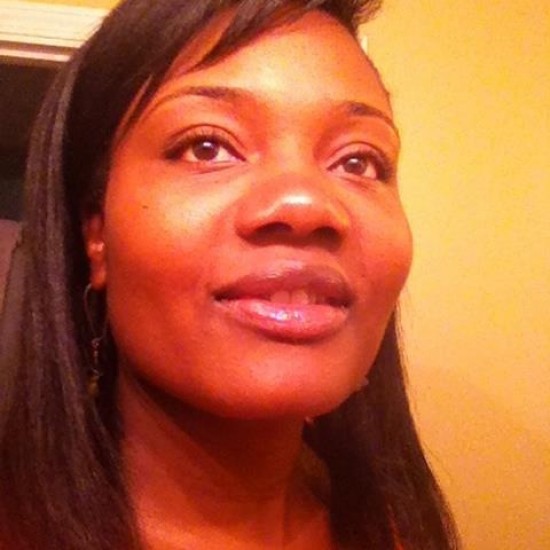
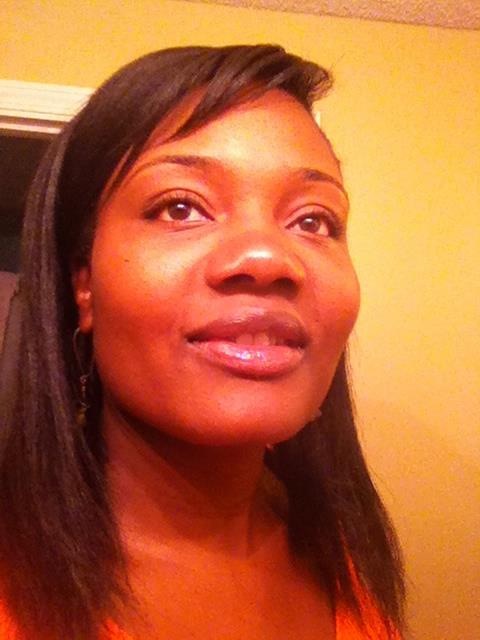
By: March 2014 Guest Blogger — Kesha Fisher
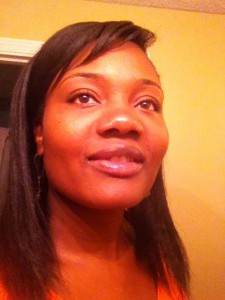
Kesha is a a married mother of four. She lives in the Pacific Northwest, but was raised in Lagos, Nigeria. Kesha is a published fiction writer, with a focus on female inequality specific to African and American cultures. “There was a time in my life when I felt my experiences were solely mine to suffer, until I started writing. Life then opened up, tremendously.” You can follow Kesha on Twitter @keshfish and on Facebook search Kesha L. Fisher Writings.

He was a single man and two daughters made up my world. We set off on a quixotic journey, bumping into love and marriage along the way. Then came the house, the children doubled, and a rescue dog sealed the deal. I had the perfect family as far as I was concerned. The children were happy and healthy, and I was married to a man who incited my happiness on a near daily basis. Our life was filled with love, laughter, struggles, fears, celebration of all successes and deep appreciation for the lessons that came from failures. It was perfect indeed, until we ventured out into the world, where I was often reminded by curt glances and that my family was not ideal.
I was hanging up a picture of my seemingly perfect family one afternoon, when I noticed how different we all looked from the family of my childhood dreams. I chuckled, remembering a discussion I once had with my best friend, Eunice, about which of our classmates we wanted to marry. She mentioned that Azuka was perfect for me. Her reasons included these facts: he was the tallest boy in class, he generously shared his lunch money, and he had just told everyone that I was the most beautiful girl in Nigeria. “He wants to marry you,” she said. Granted we were only nine years old with the possibilities of marriage being slimmer than a trampled on coin, still, the other girls teased, “Ah-zoo-kah and Keee-sha forever,” as they twirled around me in circles. I grew angry. I did not want Azuka. He was shorter than me, easily manipulated by others for his lunch money, and he was Igbo. I was Yoruba, and as long as I had known that marriage was in my future, I prayed for a Yoruba man to marry. Although I spoke English as well as Yoruba, it was of the utmost importance that I spend the rest of my life with someone who came from my father’s tribe and spoke all of the same languages as I did. I swore to God that I would never marry anyone who did not meet such a standard.
Even with an American mother, I presumed my future spouse would come from my neighborhood in Ikoyi or somewhere in Lagos. He would be used to eating pounded yam and egusi soup without me having to explain why watermelon seeds were used to thicken soup instead of getting tossed out with the rind. My husband would know. He would come home with akara wrapped in newspaper, greet me in Yoruba, “Bawoni, Iyawo mi,” and sit at the head chair as I doled out the fried bean cakes to our children. We would watch Yoruba movies, and laugh at the exaggerated nuances of our people without anyone needing to explain what anything meant. That was my idea of ideal.
That was also when my world was still so small. When my parents separated, we returned to America with our mother. Living in Texas, I learned quickly that not only were Yoruba boys non-existent in the way I expected, the black boys wanted no part of an African girl who at twelve still wore pig tails and ballet slippers to school. Most of them liked the chipper blonde girl whose clothes accentuated her breasts and high heels sent her soaring so high, she sat alone on a pedestal I could never reach. Those boys called me African booty scratcher and nappy-headed, and wrinkled their brows to my smile. It was a special kind of despair, feeling as if a mate of my own kind would never be an option for me.
Sure I was barely a teenager, and my mind should have been far from thinking about love and marriage, but in middle school America, it was all the rage. Talks of finding mates came with actual discussions about mating. I did not want to have sex with any one, but I did want my very own boyfriend. It was after all the ultimate goal of every child strolling the halls of Beverly Hills Intermediate school. Before math, English or science, everyone wanted to know who was going steady with whom, who so and so liked. Because of this natural need to adapt to my environment, not only did I want the boyfriend, my very own trophy to indicate my attractiveness, I needed him to also be black. However, it was the Mexican boys who liked me. Asian boys glared at me with terrified eyes, and I imagined each one of them shattering into pieces should I even mutter the word hello. White boys were cordial. They responded to my greetings with deliberate smiles, yet each one would wipe his hand on his pants after shaking hands with me.
To my surprise, a white boy named Troy stopped me after science class one day, and handed me a note. In it, he detailed his affection for my dark beauty, my mild personality and kindness. I was to tick a box yes or no to going steady. I smiled as I consumed his warm words and by the end, I ticked no. The letter he returned to me came with colder words, some of which labeled me a racist who cared for what others thought more than my own happiness. He was wrong about me being racist, but I knew he was right about my fear. He didn’t understand that I could not be the black girl strolling down the halls hand in hand with a white boy. I had seen the way other kids treated those girls. Black boys stopped them in their tracks just to point and laugh. Black girls stared and feigned disgust while discussing among themselves the beautiful children that would come from the union, and white girls and boys stared without publically expressing their feelings. After weeks of avoiding Troy in the halls and pretending his letter had not accurately pegged and exposed my truth, I noticed he had disappeared. When I finally found the courage to ask about him, I learned that his family moved away, and I would never get a chance to tell him he had been right.
My priorities changed with the natural progression from adolescence to womanhood. I had spread my wings further west, and ended up in California where the black boys were more accepting of my sundry background. I even dated a couple. One of my boyfriends was Chinese and two were Latino. My first serious relationship with a black man produced two daughters and the relationship ended badly. After two years of dating my new boyfriend, he fell to one knee with quivering lips and shaky hands asking for my hand in marriage. He was taller than me, extremely generous with every part of his life, and Irish American. Nigerians call his kind oyinbo, white man. In all those dreams where I held hands with my spouse, carting our children to and from wherever my dreams took me, I had not seen Kevin’s face anywhere. Until I came to America, I seldom saw white people outside of television for that matter. However, the feelings that manifested from my expectations from a good marriage were encapsulated by the love I felt for this man, and his love for me and my children. He was to me, the perfect man. He was not Yoruba, or black, but he had come into my life and pieced together all the broken pieces of my shaken world. His favorite dish of all the foods I cooked happened to be pounded yam and egusi soup, and we found laughter in all the nuances of our adjoining worlds. I smiled, said yes to the ring and a life with him by my side. We went to Nigeria to wed and his face replaced the man who stood beside me in all those dreams.
We live in America now, and when I am out with my husband, black men stare. Some have even stopped us to ask me, “Why him?” Whites, male and female alike, stare with blatant smiles of approval, and some roll their eyes. Depending on the black woman, I often think they see me as a self-loather or a martyr who has chosen to stand before a firing squad and accept the hits they would not dare risk, who knows, I am not in anyone’s head. I only live in a world where my man happens to come from a place that is different from mine, and my hope is for others to find a similar fulfillment in their own relationships.
The reality of a mixed marriage is one that we have had to get used to. Although we know that being human trumps the differences of skin color, we also acknowledge our dissimilarities. We have different tastes in music, I tease him about his vast preparations before sun exposure, and he jokes about my long and tedious measures with mine and the children’s hair care. We fear the bemusement from others when we joke about race, what it means when my folks shift their way of speaking in his presence and how our children have had to adapt to the changes around them. Fortunately, these complications rarely come into play, so we focus on the good. We know that our little family needs to make sense to only us, and it is exactly as it should be.
I was not the woman of his dreams, and he was not present in any of mine. What matters is that our lives and experiences led us to one another. Melding black and white is no easy task, even in today’s America. But just as there is a time in every day when night becomes day and day returns to night, there are no seams illustrating these differences. It just happens. We know we are not the ideal cake-topper couple, nor do our children match. He has learned to ignore the looks he receives when his black step daughters call him Daddy. I have had to smile and shrug off questions about whether I am the nanny to my blonde-haired, green-eyed daughter. We know that strangers will take these second glances at us and quietly wonder how we came to be, but more importantly, we have decided that our union needs no one’s approval. So, when the world comes into ours to show its disapproval, I simply laugh and say to myself, “It works for us.”
By: March 2014 Guest Blogger — Kesha Fisher
Kesha is a a married mother of four. She lives in the Pacific Northwest, but was raised in Lagos, Nigeria. Kesha is a published fiction writer, with a focus on female inequality specific to African and American cultures. “There was a time in my life when I felt my experiences were solely mine to suffer, until I started writing. Life then opened up, tremendously.” You can follow Kesha on Twitter @keshfish and on Facebook search Kesha L. Fisher Writings.

We are enamored by the plays of Velina Hasu Houston - whose work consistently addresses the mixed experience in new and exciting ways, and whose characters are sensitively portrayed with depth and caring. We can’t wait to see her new play Cinnamon Girl.
Let us know if you go, and if you’d like to add a review to our site. More info on show dates and times here: Cinnamon Girl - a new play by Velina Hasu Houston
Here’s more on Velina Hasu Houston: Official Website and an informative Wikipedia page
Check out these wonderful scholarships available to writers. Even more incentive to get those Mixed Roots Stories told! Click here for more info: Vermont College of Fine Arts Scholarships
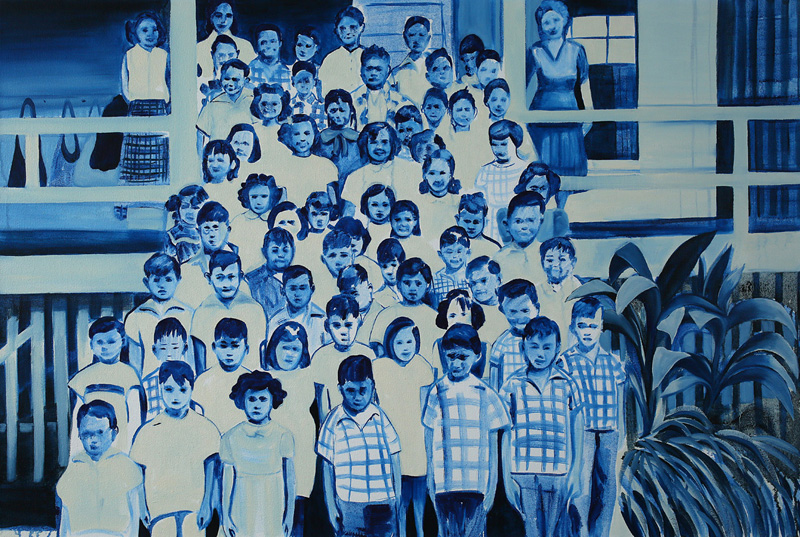
We work closely with visual artist, scholar and professor Laura Kina on the Mixed Roots Stories programming for the Critical Mixed Race Studies conference (November 2014). She consistently explores the mixed experience in her work and in her classrooms. Here’s information on her current exhibition:
This week in Memphis - join Laura in person for the opening reception and artist lecture or visit the show virtually.
|
|||||
|
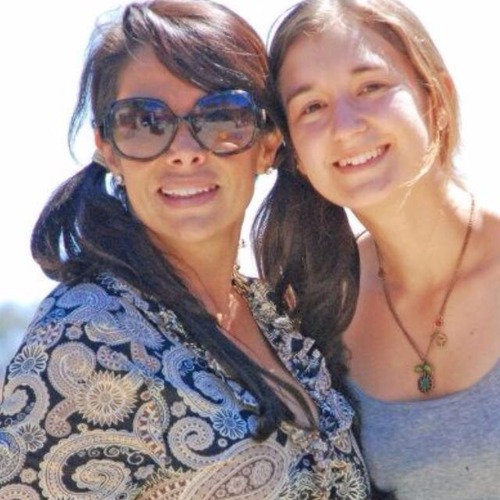
Moderated by four women, the most recent posts feature photos of family members. From their ‘about’ blurb: This is a blog for those of us who are forgotten in the mainstream anti-racism movement. Those of us who are biracial, multiracial, and multiethnic and have struggled year after year with establishing our identities. This is a safe space for all mixed people of color.
Here’s the link: http://weareallmixedup.tumblr.com/
Thanks Meso, for submitting your story!
Meso is an exploratory food project that brings people together to craft, sample, and discuss recipes featuring hybridity in food. Our goal is to create a Mexican-Chicagoan cookbook. In this project, we set out to celebrate our hybrid identities and call out to each of us who have felt like we’re in the middle, neither this nor that, but something of two or more, and still distinctly American. There is a reason we chose to communicate through food. For those of us living with mixed-race identity in the United States, it is a fitting metaphor for experience–mixed, concocted, politicized, appropriated, and of course, consumed. Food’s very nature allows for alterations to the recipe, improvements, mistakes, and quickly the “authenticity” of a dish becomes muddled. And, in the end, food brings us together like nothing else. With this and much more in mind, we present Meso, an exploration of Mexican-Chicago cuisine. This project is a test kitchen. Our process is collaborative and inclusive. We seek people who are interested in exploring identity, making connections between foods and cultures, and are not afraid of bizarre, spicy, frothy, heavy, exquisite, charred, or whatever else might describe the concoctions coming from our chefs’ baking dishes. Our participants give honest feedback and input on food, collectively deciding which recipes are published.