I am a 35-year-old mixed race woman of Black Jamaican, Nigerian and White British heritage, born and living in Leeds, Yorkshire in the UK, and I recently finished a counselling diploma. Earning that diploma required me to do a great deal of work examining my own racial and cultural identity. The course also required me to complete 20 hours of personal counselling.
When I began the diploma I had no idea how much work lay ahead of me in exploring my identity as a mixed race woman. That surfaced once I started my personal counselling. I came to see that I carried a great deal of unresolved feeling about past experiences of racism, and about the lack of understanding and acknowledgement I had encountered as a mixed race female. I also needed to examine race-related issues within my family, along with ancestral baggage. Finding a suitable counsellor to work with, though, proved extremely hard. Before I started, it hadn’t really crossed my mind that getting my counselling needs met could be difficult if I wanted to discuss being mixed race in any depth. My experience — including sessions with both a white and a black counsellor — was that my counsellors genuinely struggled to work with me. My first counsellor defended against hearing about my experiences of racism, and the second held his own ideas about how I should see myself as a mixed race person, which clashed with my own views. So, after two failed attempts at counselling, I decided to help myself and went off to read widely on mixed race identity. Most of what I read was academic research from the U.S., since research in the U.K. on the mixed race population is incredibly thin on the ground. Worryingly, only one UK academic paper on mixed race identity and counselling has actually been published, and that was in 2014!
The mixed race research from the U.S. that I read helped me enormously. I located a good deal of it fairly easily online, though I did have to buy some books, which were often very expensive and sometimes hard to find copies of. The research had its limits, since being mixed race in the UK is clearly not the same as being mixed race in the US, given the different political landscapes and histories. Slavery is far more tangible in the US, and that shapes perceptions of race there in significant ways. The UK’s own history of slavery and colonisation still weighs heavily on thinking about race here, but it carries somewhat different implications for Britons of colour. Even so, I found the US research useful, and I managed to find enough general literature on race and cultural issues in the UK to benefit from it.
With a better understanding of myself from all that reading, I returned to counselling and found a counsellor who did have some specific knowledge of mixed race identity. With her, I was able to do some valuable work on my identity.
It seems important to note, though, that counsellors in the UK are under no specific requirement to show any meaningful competence or knowledge when it comes to working with the mixed race population, or with racial issues more broadly. My own negative experiences in counselling are certainly not unique, and it is widely accepted that counsellor training falls short in preparing counsellors to work competently in this area. To anyone reading this who is considering counselling around racial issues, I would recommend doing your homework on your counsellor’s level of skill and comfort with the topics of race and culture.
Without reading academic texts on mixed race identity, I honestly don’t think my understanding of myself would have progressed as far as it did. It was essential in helping me develop a fuller sense of myself as a woman of colour, as was my growing interest in intersectional feminism. Academic research in particular helped me see that my experiences were entirely normal and shared by many women. It also gave me ideas for improving my self-esteem and my life.
The problem I would highlight is that academic texts can be challenging to read at times, even for those with the privilege of a university education. I am very aware that the mixed race population in the UK will more than likely be denied the benefits of academic texts that could serve them, because such texts are not readily available, are not always easy to read, and because UK-specific research on mixed race identity is minimal in any case. Committing to the search for suitable texts takes real dedication.
The answer seems to be that mixed race people urgently need greater representation in UK social policy, and that mental health experts need to do the groundwork of translating academic texts on mixed race identity into their practice. We are caught in a quandary, though, because for that to happen, more academic research on mixed race identity is needed in the UK in the first place. As far as academia is concerned, the future for the mixed race population does not currently look very bright in my opinion.
Britain’s mixed race population is growing fast and is the third largest ethnic minority group. Both black and mixed race people are over-represented in prisons and in the mental health care system. Mixed race people have been reported as more likely to be victims of crime. Mixed race children are the most likely to be placed in care and are also over-represented in youth justice and child protection systems. I think it’s fair to say that, right now, academia is definitely failing us.
This piece was originally published at the Ain’t I A Woman Collective.
Like Nicole, the Mixed Roots Stories team is eager to see more mixed race representation in global academic discourse. Stay tuned with Mixed Roots Stories this year as we release the Mixed Roots Commons, our forthcoming online forum where invited scholars will gather around the central themes and debates shaping Critical Mixed Race Studies today.
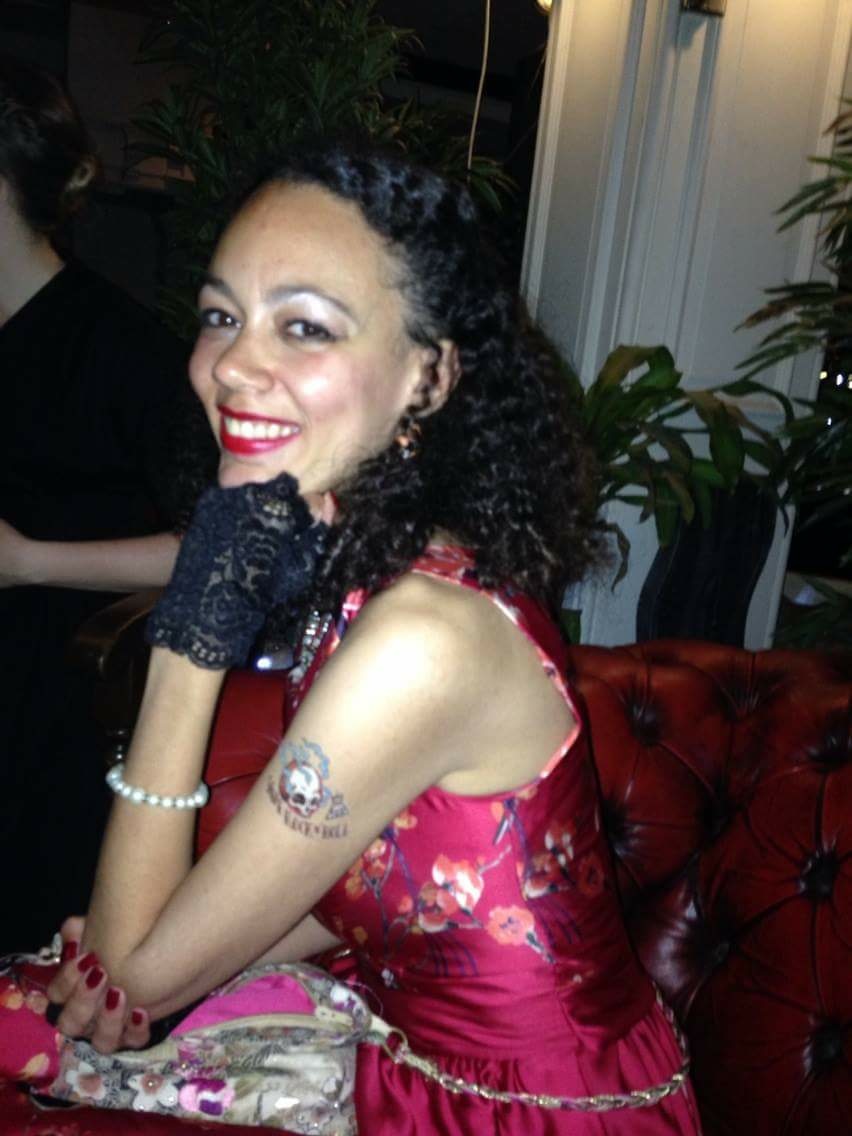 Nicola Codner is 34 years old and is currently training to be a person-centred counsellor in Leeds, UK. She is biracial, with White British and Black Caribbean heritage. A strong interest in difference and diversity led her to retrain as a counsellor. Before that, she worked as a publisher in academic publishing. She is keen to keep developing her writing experience, which is part of what draws her to blogging. She holds a degree in English Literature and Psychology.
In her spare time, she enjoys reading, music, art, theatre, travel and cinema.