
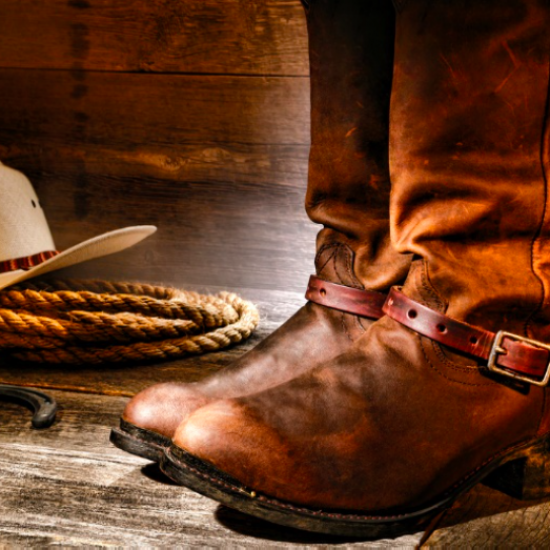
Some lives remain intertwined, however many years go by.
February had arrived in Tucson with an early spring — cool, dry and unhurried. A soft breeze stirred the Palo Verde and Cottonwood trees, barbecue grills were fired up, and children spilled into the streets to play.
Excitement buzzed through our neighborhood, and the whispers grew louder once word got out that the Fiesta de Los Vaqueros Rodeo had come to town. A parade, marching bands, proud horses and a tribute to Mexican and American cowboys were all on the way. To a desert kid, that meant everything. Cowboys seemed larger than life. But that year I would miss it all. I was somewhere else — near the celebrations, yet not part of them.
At five, I was judged too young to enter the ground-floor hospital room where Francisco — my Abuelo, and a real cowboy — lay dying. He was old, frail and fading, and his death was not wholly unexpected.
Relatives drifted in and out all day to pay their last respects. Passing my twin sister Linda and me in the hallway, they would cup our faces or pat our heads out of duty, then continue on. Everyone was absorbed in private thoughts, and that distraction left us alone for a moment.
Seizing the chance and eager to see our grandfather, Linda and I didn't hesitate. We bolted out of the building — me in my little-boy cowboy boots and chaps, Linda in her tasseled vest and matching skirt — and into the pomegranate-lined courtyards spread across the hospital grounds.
Too small to see into the rooms from ground level, we jumped, hopped and scrambled up the brick ledges, peering through windows and startling patients and visitors alike. A stern nurse in a stiff, starched white linen uniform caught us peeking, shoved her arms through the window and tried to grab us.
Scolding us, she waved her finger and shouted, “¿Qué estás haciendo niños, ¿dónde están sus padres?” (“What are you doing, children? Where are your parents?”).
She was a big woman with a heavy mustache and crooked yellow teeth, and she scared us badly — yet her scolding only pushed us to search harder for our grandfather.
By then we knew our parents had to be looking for us. One more courtyard, one more hospital wing to check; not this one, not that one. Then — “I found him,” I shouted. Linda was across the courtyard, tired and moving slowly.
I climbed onto the window ledge, and there was Francisco, propped up in his bed, alone and seemingly forgotten, while everyone else was surely hunting for us in a panic.
I tapped on the window, and he turned slowly toward me. At first he couldn't see me, since only the top of my head rose above the ledge. I climbed higher until my chin pressed to the glass. Then, with a raised eyebrow, he spotted me, and our eyes met.
The old man still held a spark of magic. He sat up straight, smiled, winked, picked up the sweat-stained cowboy hat from his nightstand and waved it high above his head.
From one cowboy to another, he seemed to say, “I see you, little man.” Tears rolled down his weather-wrinkled face. I wondered, “Is he happy or sad?” Then he smiled again, and so did I. A moment we shared forever, frozen in time.
By then my Aunt had come into the room, and my Mom and Dad, in hot pursuit, had reached the courtyard with Linda. They walked to the window I was clinging to and, as parents do with disobedient children, swatted my behind. A small price for finding Francisco. I climbed my Father’s arm until he and Mother gave in and lifted us up so we could wave goodbye to our Abuelo. Sadly, he passed away later that day — peacefully, with family around him.
Over the years I have thought of him often, encouraged in part by how much I resemble the old man. I always wondered how he came to the Southwest. I learned that Francisco Wilson’s family traced back to the Celtic Euro-Iberian Peninsula (northern Portugal and Spain), with ancestors who eventually sailed up the Atlantic coast to southern England.
Francisco’s father, Baldomero, was the son of a Cornish miner who left the Southwestern Brythonic region of Great Britain for Mexico in the early 19th century. Cornish miners were regarded as the finest hard-rock miners anywhere, but weak economies and metal markets in Europe drove many to emigrate to mining districts worldwide — especially to Latin American silver towns, including Alamos, Mexico, where Baldomero lived and worked and where Francisco was born.
Our Celtic ancestors belonged to an ancient civilization that, according to chroniclers, arose from the lower Danube region. Their traces reach into what are now Germany, Italy, Greece and the Iberian Peninsula. They sacked Rome in 387–386 B.C., and in the following century they destroyed the armies of Macedonia in Greece.
Followers of the Druid religion, they believed in human immortality. The Celtic clan — specifically the Cornwall and Cornish peoples — is documented as living from around A.D. 400, half a millennium before England’s origin, until roughly A.D. 890. They are a distinct ethnicity apart from most of England’s Anglo-Saxons. The Cornish branch of our family came out of this civilization.
That Francisco was Celtic Cornish, born in Mexico and spoke no English when he reached the United States was both startling and illuminating. (The irony, of course, is that the Cornish also had their own language before being absorbed into the dominant English-speaking culture.)
He eventually left Mexico for Arizona, then a U.S. territory, in 1909, fleeing the Mexican Revolution that set Porfirio Díaz’s repressive dictatorship against a populist revolt led by Pancho Villa and Emilio Zapata. Francisco joined the U.S. Army during World War I and later settled into farming and ranching in southern Arizona.
Learning all of this gave Francisco’s life new meaning for me. I have come to believe that waving his hat goodbye was a last effort to connect with his niños pequeños. He wanted to be sure he had joined the past to the future before he went. He was his father’s messenger, carrying a history to hand down, and I have accepted as true the belief that I was his chosen — if then unknowing — recipient.
Through the years I have protected and preserved the meaning of Francisco’s death and brief life — it has kept me grounded and given me purpose and perspective.
I return to my Abuelo when I need guidance and when my bond with my son needs reassurance. My eyes — or are they Francisco’s? — lock onto his. Legacy cannot be escaped; it is prescient in knowledge and history.
My son, you will hear and remember what I tell you. Many have come before you. A host of fathers, with different names from different lands, foretold your life. They crossed continents and braved dangerous sea voyages around the world. They walked through mosquito-filled Yucatan jungles and swamps, survived tropical diseases, climbed the Sierra Madre Mountains and crossed the Sonora desert to give breath to your life.
You are their legacy. Do not turn away from it. Embrace it. It is your inheritance. Pass it on.
My childhood memory of Francisco brought my family tree into focus, linking mixed-race and multicultural people proud of their working-class roots, symbolized by miners’ hard hats and ranchers’ Stetson hats. Kindred spirits — a cowboy thing.
I traded horses for Subarus and Jeeps long ago. Yet the memory of Francisco stays forever sheltered in this little boy’s heart.
Many years have passed since I last attended Tucson’s Fiesta de Los Vaqueros Rodeo. But I will go again, if only to honor Francisco’s heritage — and mine — and the lifeline he passed to yet another Wilson generación.
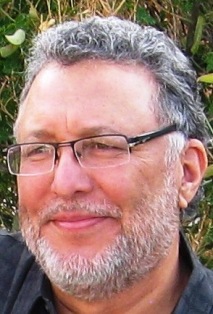
Frederico Wilson is currently the owner and President of an International Fluid Power Procurement and Sourcing Company; founder of a non-profit organization (under development); blogger at mestizoblog.com, focusing on multicultural perspectives and issues. He is a USAF veteran (environmental/missile inspection specialist); and former domestic and international professional in the Airline, Telecommunications, Sales, and Financial Securities industries. Originally from Arizona, he is a lifetime student of cultural anthropology and applied behavioral science. He attended Arizona Western and the University of Arizona and holds numerous military technical, and corporate management certifications and licenses.
He is of mixed Mexican, Indian (Yaqui Tribe), Euro-Iberian, and Cornish Celtic ancestry. He lives, works, and writes in metropolitan Seattle, Washington.
He is best described by a quote attributed to Anthony Bourdain when recounting the preparation of a Burgundy wine-base rooster entrée.
“So, they take this big, tough, nasty-ass rooster, too old to grill, too tough to roast. Marinate and simmer the shit out of it, before it’s tasty.”
Frederico is the author of a new book, Escaping Culture: Finding your place in the world. Find out more on his website: mestizoblog.com